A record quarter and a lower guide
Intel reported third-quarter results on 29 October showing revenue of $16.5bn, up 21% year over year, and a data centre business that has stopped being the company’s problem. Data Center and AI revenue reached $7.3bn, up 78%, and the segment’s operating income came in at $3.04bn against $964m a year earlier — more than triple.
Then Intel guided the current quarter to $15.0bn to $16.0bn, below the quarter it had just reported, with non-GAAP earnings per share of $0.25 against the $0.52 it delivered in the third quarter. The record and the step down are in the same filing.
Where the growth came from, and where it did not
The two halves of Intel’s business are now moving in opposite directions. The Client Computing and Physical AI Group, which is the PC business, brought in $8.1bn, down 5% year over year. It is still the larger of the two by revenue, and it is shrinking while the smaller one grows at 78%.
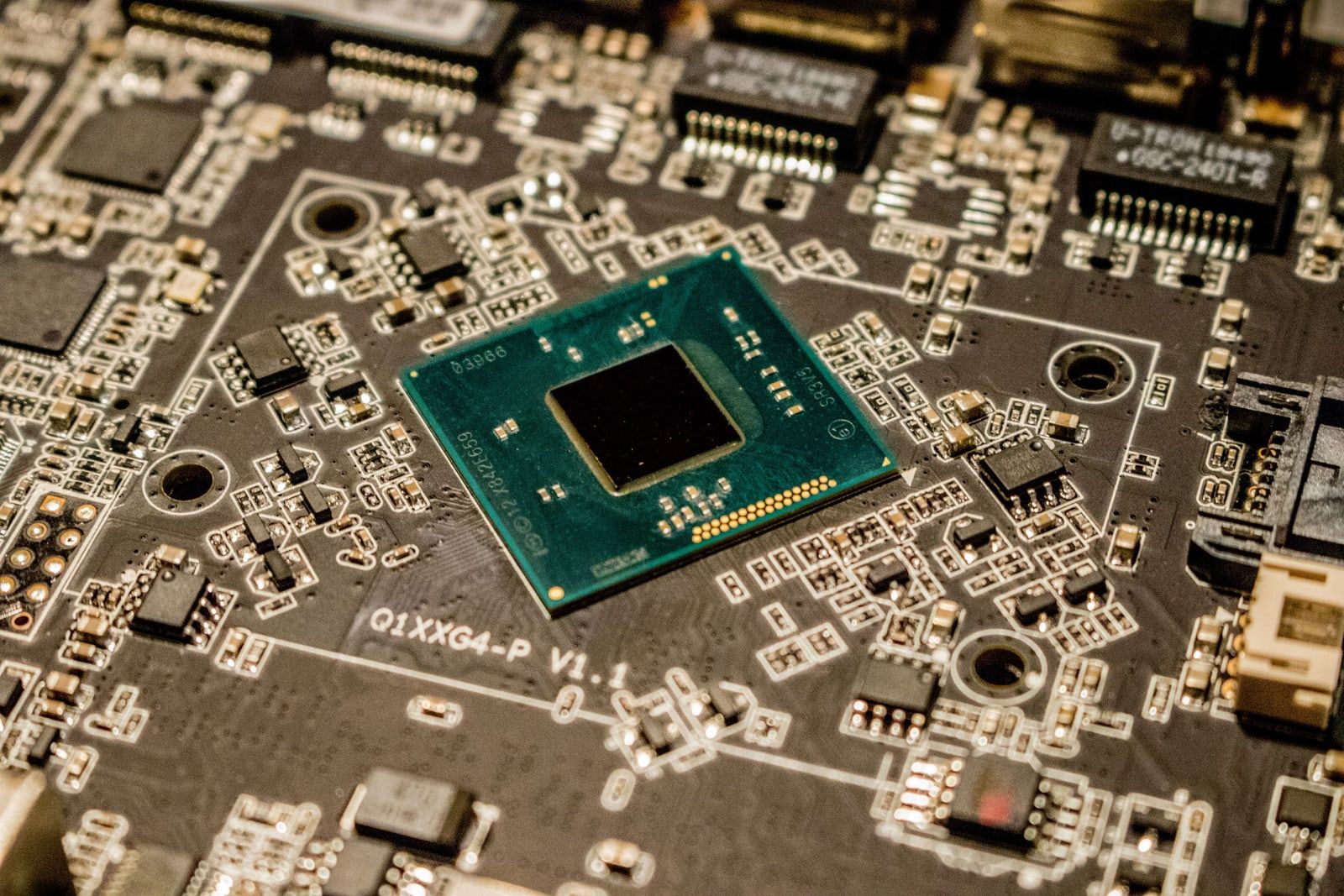
Chief financial officer David Zinsner described the quarter as including “our strongest data center revenue growth in 15 years”. That is a long baseline, and it is worth being precise about what it measures: Intel’s own server revenue, not its position relative to competitors, and not accelerator sales. The segment is called Data Center and AI, but the demand Intel’s own chief executive names is for Xeon, its server CPU line.

The constraint Intel names is supply
Chief executive Lip-Bu Tan put it directly: “Our immediate priority is to unlock additional supply to meet extraordinary demand for our Xeon family.” That is an unusual sentence from a company that spent several years being described as demand-constrained. It also reframes the guide. A quarter guided down while the chief executive says demand is extraordinary is a quarter limited by what the company can build and ship, not by what customers will buy.
It is a vendor’s characterisation of its own order book, and Intel has not published unit numbers or backlog figures to support it. But the shape is consistent with what hyperscalers have been saying through the same earnings season about component availability.
Why server CPUs are growing at all
The simplest reading of the 78% is that accelerators do not run on their own. Every GPU rack sits behind host processors, memory and networking, and the build-out that has dominated capital spending for two years drags that content along with it. Intel does not have a competitive accelerator business at scale, but it does have the x86 server franchise that the racks are attached to, and the current cycle buys a lot of both.
That is a better position than Intel held a year ago and a narrower one than the segment name suggests. It leaves the company exposed to the same question everyone else in the supply chain faces: what happens to server attach rates if accelerator deployments slow.

What to watch
Three things in the next report. Whether the supply Tan says he wants to unlock actually arrives, which is the difference between a guide-down caused by capacity and one caused by demand. Whether CCPG’s decline steepens or flattens, since it is still the bigger line. And whether Intel starts breaking out what inside Data Center and AI is server CPU and what is anything else — because at 78% growth, the composition of that segment has become the most important disclosure the company does not make.