The sentence that matters
ASML reported third-quarter net sales of €11.66bn on 14 October, towards the top of its own guidance, with net income of €4.96bn, a gross margin of 57.5% and basic earnings per share of €12.95. It shipped 113 new lithography systems and eight used ones. None of that is the news.
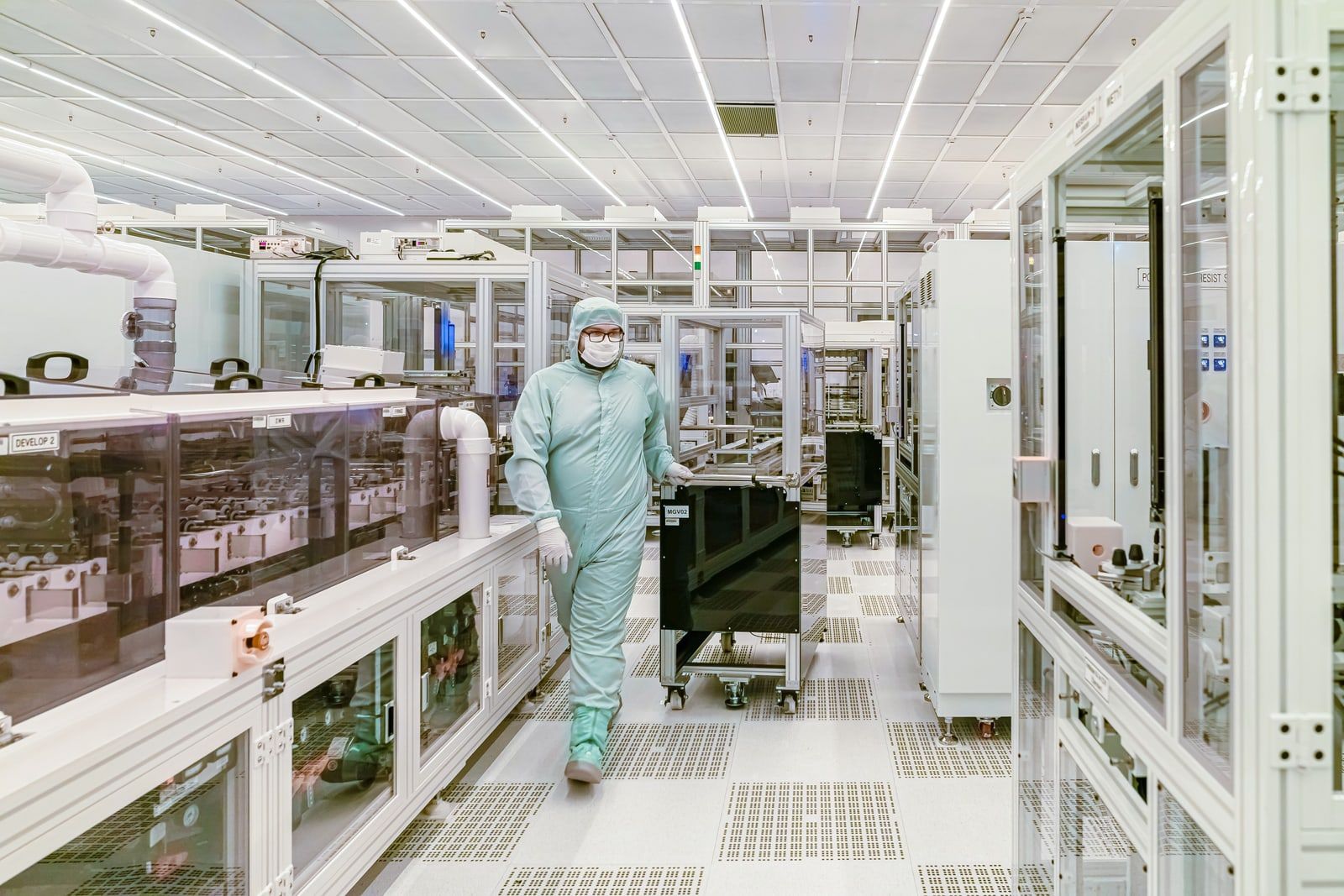
The news is one sentence from chief executive Christophe Fouquet in the results release: “we now expect that our supply as currently planned for both 2027 and 2028 will not fully meet the demand of our customers.” ASML is the only company in the world that builds extreme ultraviolet lithography machines, the equipment every leading-edge logic and memory fab depends on. When it says it cannot make enough of them two years running, that is a ceiling on how quickly the industry can add AI chip capacity, not a forecast about one supplier’s quarter.
The company said it is investigating ways to raise 2028 capacity beyond the 30% increase it had already announced.
Customers are asking four years out
On the earnings call, Fouquet said customers have concluded that “demand for their product will outpace supply through at least 2028”, and that they are “expressing interest in placing orders for 2029 and even 2030”. Chief financial officer Roger Dassen said customers are asking ASML to accept purchase orders already for 2029 and 2030, and that the company has not accepted them. Lithography tools are normally ordered a year or so ahead. Four years ahead is not normal.
Dassen gave the breakdown. Of €8.4bn in net system sales, €4.1bn was EUV — including one High-NA machine — and €4.3bn was non-EUV. Logic accounted for 54% of net system sales and memory 46%, a memory share that reflects how much of the current build-out is high-bandwidth memory rather than processors. Installed base management sales came in at €3.29bn, about €400m above guidance.
Half a billion euros from a model company
One line in the profit is not about machines at all. Dassen said the €5bn net income included roughly €0.5bn from a higher valuation of ASML’s initial investment in Mistral AI. About a tenth of the quarter’s profit at the company that makes the machines came from marking up a stake in a company that buys the chips those machines produce.
The guidance
For the fourth quarter, ASML guided to net sales of €14.2bn to €15.2bn at a gross margin around 57%, with R&D costs around €1.2bn and SG&A around €0.4bn. For the full year it expects €44bn to €45bn at a gross margin around 56%. It held €12.74bn in cash and short-term investments at the end of the quarter.
What to watch
Two things. The first is whether ASML starts accepting purchase orders for 2029 and 2030; that would convert a stated interest into a committed order book stretching further out than this industry normally plans. The second is the 2028 capacity number. ASML has already promised a 30% increase and now says it is looking for more. Whatever figure it lands on is, in practice, an upper bound on how much leading-edge silicon the AI build-out can consume that year.