A rule delivered out loud
Nvidia has told its cloud-computing customers to sell at least 51% of their services to companies that are not Chinese, the Financial Times reported, in an account relayed on 4 November by Data Center Dynamics. The instruction was given verbally rather than in written documents, and it covers future contracts rather than existing leases.
The target is a workaround. With Nvidia’s most capable accelerators barred from export to China, Chinese companies have leased compute abroad instead, much of it in Malaysia and Indonesia. A majority-non-Chinese requirement puts a ceiling on how much of that business a regional provider can take on.
Providers say the ceiling is hard to live under. It is difficult to find enough non-Chinese clients outside the US, a Singapore-based group told the FT, adding that if the rule is strictly implemented it will definitely hurt business.
A $7bn deal that did not happen
Data Center Dynamics also reported that Oracle has dropped a $7bn arrangement with Tencent that would have given the Chinese cloud provider access to as many as 100,000 Nvidia GPUs. By that account the deal fell apart under pressure from US officials on Oracle, and from Chinese officials on Tencent to buy domestic chips instead. Two governments pulling in the same direction from opposite ends.
Nvidia has also narrowed who may buy from it in the region. It has more than halved the number of Asian customers authorised to purchase its AI chips, and this year created a white list of companies that have passed tougher compliance checks.
Six million ordered, a fraction arriving
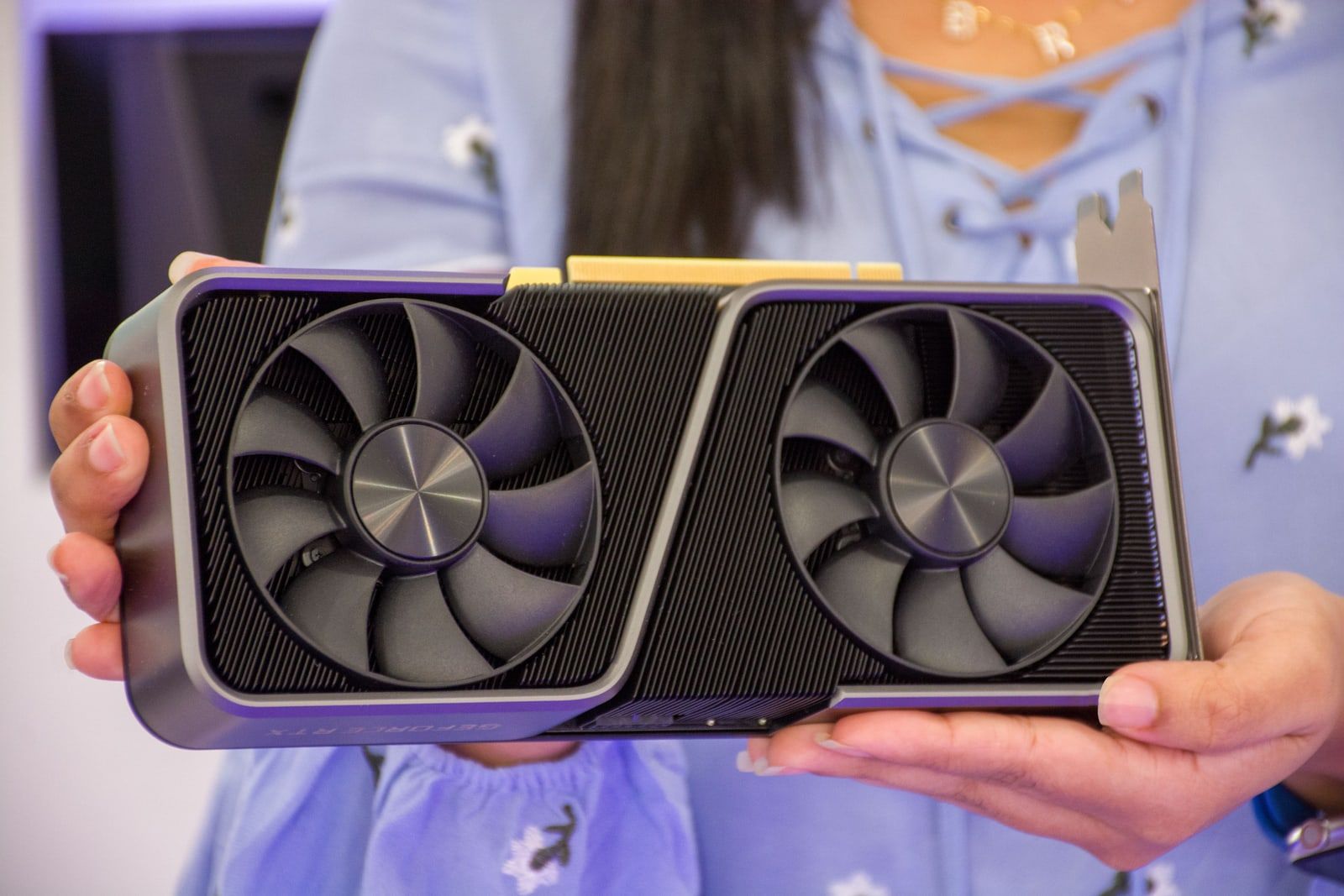
The chip that is allowed into China is the RTX Pro 5500, a workstation graphics card rather than a data-centre part. The B300 remains banned. Chinese buyers have ordered roughly six million RTX Pro 5500s, but Bloomberg reports they expect to receive only about 1% of that over the coming months — a few tens of thousands of units across four months.
That shortfall is capacity rather than policy. Nvidia is still ramping production, and from 2027 its Rubin platform is expected to take a large share of its manufacturing allocation at TSMC. Reuters reported in October that Nvidia had warned partners they might receive 5% to 10% of requested volumes, with samples due in December and commercial shipments in the first quarter of 2027. Chinese hyperscalers put the realistic total at around 700,000 units by the end of 2027 if export rules do not change.
How Nvidia frames it
An Nvidia spokesperson told Bloomberg that US firms continue to be restricted by a combination of outdated US export controls, which cover gaming products released nearly half a decade ago, and China’s own limits on US imports. That is a company describing itself as caught between two states rather than as a party administering a rule — which, in the case of the instruction to cloud partners, it is.
What to watch
Whether the 51% rule is ever written down. A verbal instruction is hard to enforce and harder to contest, and none of it has been published by Nvidia or by any regulator.