A state dinner with the AI industry at the table
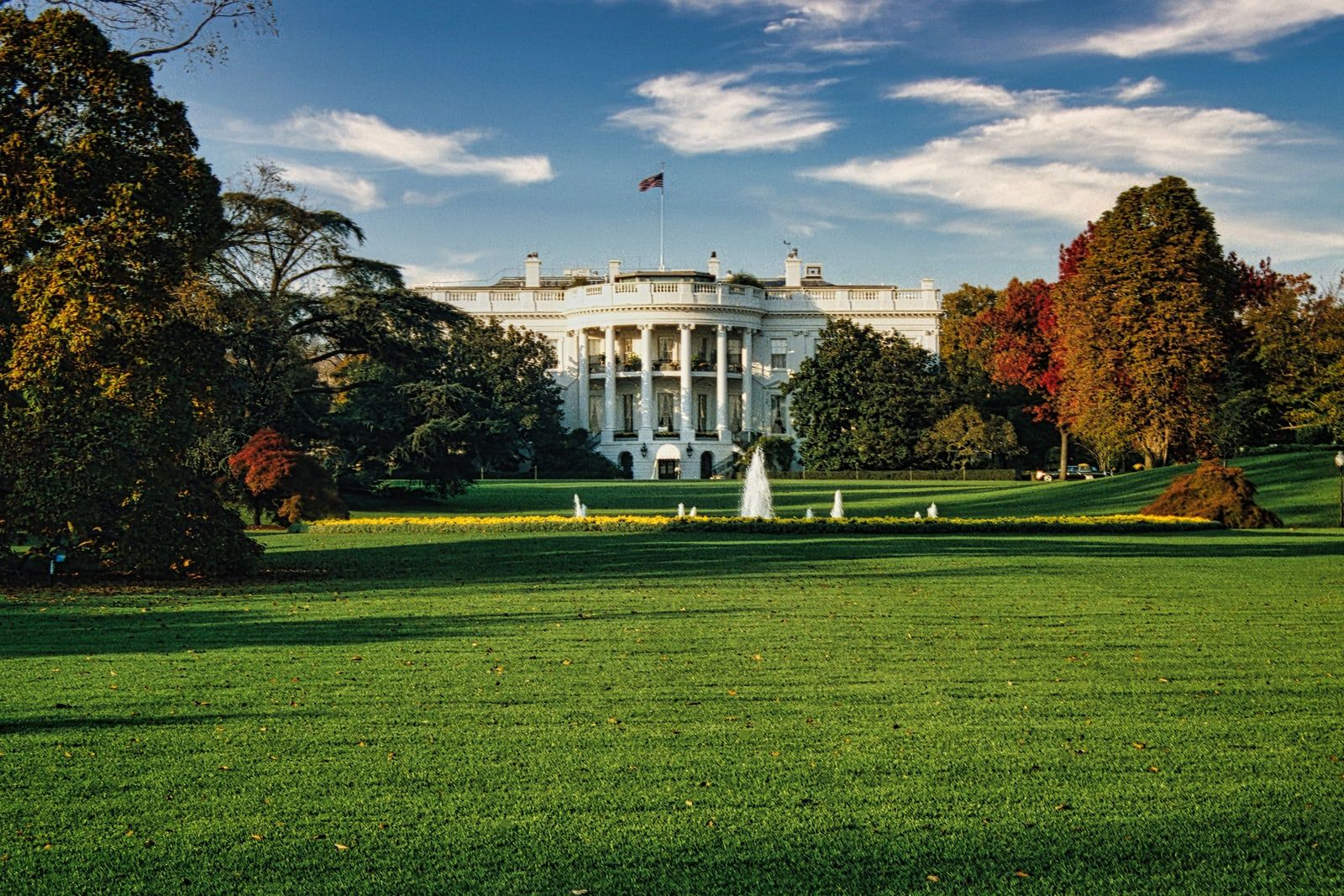
President Donald Trump hosted President Xi Jinping at the White House on Thursday, and artificial intelligence ran through both the talks and the state dinner that followed. Seated with the two presidential couples were Nvidia chief executive Jensen Huang and his wife Lori Huang, SpaceX chief executive Elon Musk and AMD chief executive Lisa Su, alongside Apple’s Tim Cook, CNBC reported. OpenAI chief executive Sam Altman and president Greg Brockman, Google co-founder Sergey Brin, Microsoft chief executive Satya Nadella and Meta chief executive Mark Zuckerberg were on the guest list too.
What did not happen is as much of the story as what did. No agreement on limits, no joint standard, no timetable. The United States had not issued its own readout of the meeting by Friday morning.
“Leave it exactly where it is”
Trump set out his position on Truth Social before the meeting. “Super Intelligence (SI) will be a big topic of discussion, but I want to leave it exactly where it is. That is China’s position also,” he wrote on Thursday, using the term he has recently adopted in place of artificial intelligence.
The Chinese readout of the meeting is warmer in tone and lands in a similar place. Xi said the two countries “may have competition, but they may cooperate even more” on AI, and that they “can continue their dialogue on AI, exchange views on its risks and benefits, and jointly prevent the misuse and abuse of AI”. He added that “AI must be kept under human control” and should “serve the progress of humanity”. Trump, according to the same Chinese account, said the two sides should “maintain dialogue and strengthen cooperation on AI”.
Both governments have already rejected the slowdown that Altman and Anthropic’s Dario Amodei publicly called for this month. A summit that put those two men in the room did not change that.
A hotline, if anything
The concrete piece on the table predates the dinner. Treasury Secretary Scott Bessent discussed a “U.S.-China AI dialogue” with his Chinese counterpart He Lifeng over the weekend, including a channel for incidents “up to a national security level” — a mechanism observers have compared to the Cold War red phone between Washington and Moscow.
“It appears we ended up with an intent to continue dialogue, along with a hotline of some sort for emergencies,” Aalok Mehta, director of the Wadhwani AI Center at the Center for Strategic and International Studies, told CNBC.
That is a real thing, and a small one. An incident channel tells each side what has already gone wrong. It does not constrain what either builds.
The parts nobody settled
US export controls still restrict China’s access to Nvidia’s most advanced accelerators, and they were not resolved here. Nor were American claims that Chinese firms train on the outputs of more capable US systems — “distillation”, which Beijing rejects — or reports that Chinese companies rent the compute they cannot import by reaching Nvidia chips remotely in data centres outside China.
Each of those is a live dispute with money and capability attached, and each survived the visit untouched.
What to watch
The US readout, when it appears, is the first test: whether Washington describes the same dialogue Beijing described, and in the same terms. After that, whether the incident channel acquires a name, a staff and a number to call. Until it does, the summit’s AI outcome is an agreement between two governments that neither wants to be the one that slows down.