A complete nervous system, one animal at a time
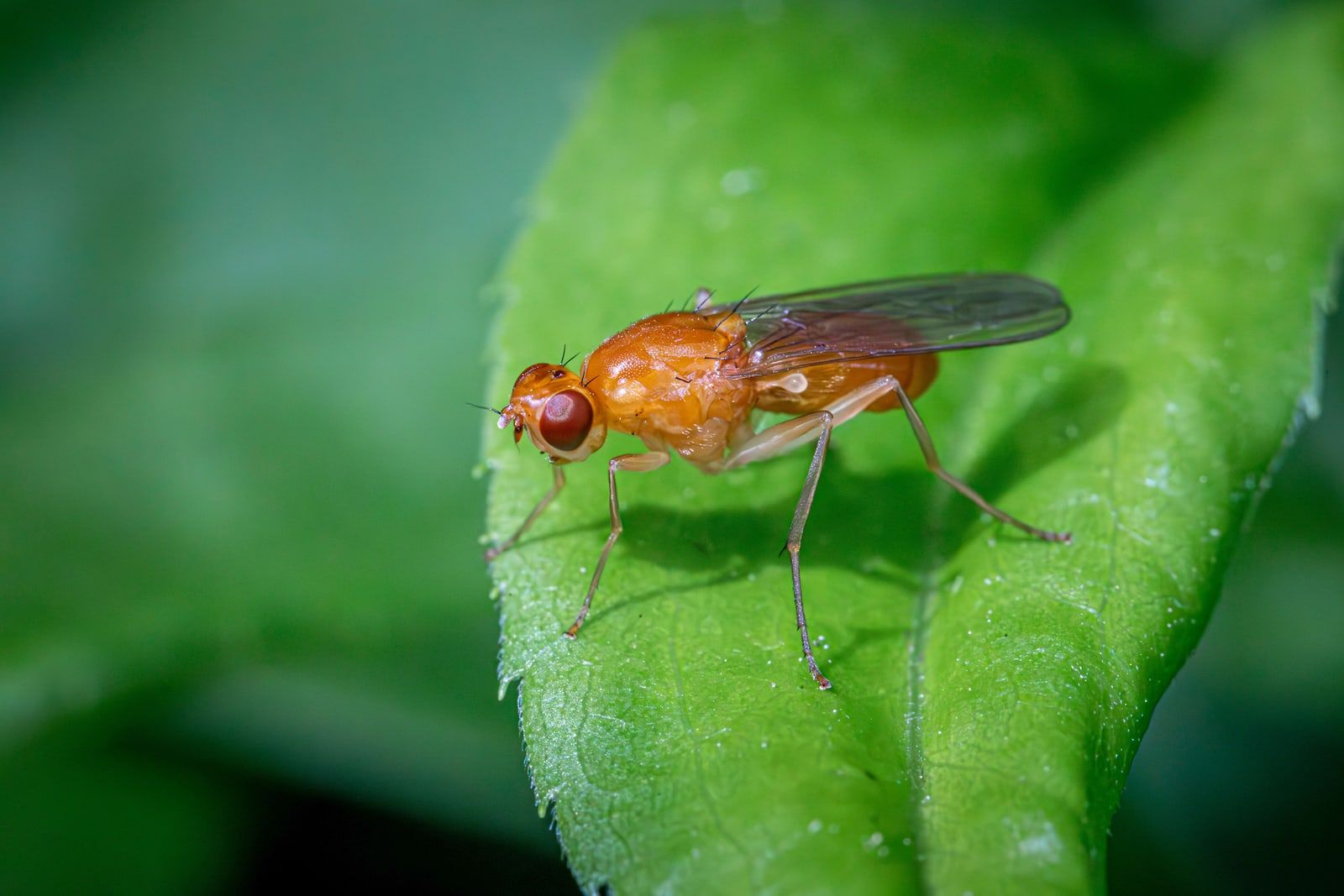
Researchers have published the first complete connectome of a male fruit fly’s central nervous system: a wiring diagram covering more than 166,000 neurons and roughly 125 million synaptic connections in a single animal. The peer-reviewed paper appeared in Cell on 3 September 2026, and Google Research, which built much of the image-analysis pipeline, published its account of the work the same day.
By neuron count it is the largest brain reconstruction assembled to date. It spans the brain, the optic lobes and the ventral nerve cord — the fly’s rough equivalent of a spinal cord — as one continuous dataset. Earlier fly connectomes stopped at the brain. “It basically lets us get from eyes to legs in one go,” Greg Jefferis of the MRC Laboratory of Molecular Biology and the University of Cambridge said in Janelia’s announcement of the work.
Why the sex of the fly is the point
Every finished fruit fly connectome until now has been female, including the hemibrain Janelia released in 2020. That made comparison across sexes impossible at synaptic resolution, which matters because courtship, aggression and mating are exactly the behaviours where male and female flies differ most.
Janelia’s project page for the dataset reports 262 sex-specific cell types and 114 sexually dimorphic ones, together roughly 4.8% of the central brain. The differences cluster in higher-order regions rather than in the sensory and motor periphery, which is largely shared.
“It is the first time we can compare both sexes of an animal with complex social behaviour,” said Gerry Rubin, a senior group leader at Janelia.
What the machine learning actually did
A connectome on this scale is not drawn by hand. The specimen is sliced and imaged by electron microscope, producing a volume in which every neuron must be separated from its neighbours before anything can be counted.
Google Research says it supplied that step with flood-filling networks — convolutional networks that start from a single pixel and grow outward, deciding which neighbouring pixels belong to the same object. For this dataset the team also improved its PATHFINDER reconstruction system by adding synthetic neurons to the training data, which Google says raised both speed and accuracy.
The automated pass is a draft, not a result. Expert teams at Janelia’s FlyEM group and the Cambridge Drosophila Connectomics Group at the MRC Laboratory of Molecular Biology proofread the segmentation, labelled the neurons and assigned cell types. The paper reports 11,710 neuron types in the finished map.
Open data, and what it is for
The dataset is released under a CC BY 4.0 licence and can be queried through neuPrint, browsed in Google’s open-source Neuroglancer viewer, or explored at male-cns.janelia.org. A preprint of the work went up on bioRxiv in October 2025; the Cell paper is the peer-reviewed version.

Connectomics has a long-standing argument with itself about what a wiring diagram buys you: a map of connections is not a map of activity, and knowing which neuron touches which does not by itself explain behaviour. What the field has consistently shown is that the map narrows the search. A circuit that can be traced end to end is a circuit that can be tested with targeted experiments rather than guesswork.
The obvious next question is scale. A fruit fly nervous system is roughly 166,000 neurons; a mouse brain is around 70 million. The methods described here are the ones a mouse-scale attempt would have to build on, and how far they stretch is the thing to watch.