What changed
Google DeepMind and Google Research released WeatherNext 3 on 3 September, the third generation of the lab’s global weather model.
Three things are new. The model learns directly from real-time satellite observations rather than depending solely on the analyses produced by numerical weather prediction. It updates hourly, where WeatherNext 2 worked in six-hour increments. And it forecasts at a much finer grid: temperature and moisture at five kilometres, other surface variables at ten, and atmospheric variables such as wind speed at twenty-five. The previous model ran on a 25-kilometre grid throughout, which makes the new one roughly five times sharper at the surface.
It also predicts natively at sparse station coordinates rather than only on a grid, and adds variables aimed at electricity systems: wind speed at turbine hub height, cloud cover and solar radiation.
The accuracy claims, and who made them
Google reports the biggest improvements in precipitation, which is where physics-based forecasting is weakest. Against NASA’s IMERG satellite dataset the company reports up to a 60% improvement in Continuous Ranked Probability Score, up to 30% against the MRMS radar product, and up to 10% against rain gauges at early lead times. For people planning a day or more ahead, it says precipitation forecasts are up to 50% more accurate.
Those are Google’s own numbers, measured by Google. The one external marker in the announcement is a claim that WeatherNext 3 ranks highest on Brightband’s live leaderboards, which are run outside Google — a useful check precisely because vendor-reported meteorological scores are as easy to select favourably as any other benchmark.
Where it shows up
This is not a research artefact left on a preprint server. Google says WeatherNext 3 powers forecasts in Search, the Gemini app, Google Maps, the Maps Platform Weather API and Google Earth Engine. Researchers and businesses can query the data through BigQuery and Earth Engine or bulk-download it from Google Cloud Storage.
That distribution is the substance of the story. A five-kilometre hourly forecast reaching consumer products is a different kind of event from a paper reporting a lower error score, because it changes what hundreds of millions of people are told about tomorrow.
Why the energy variables matter
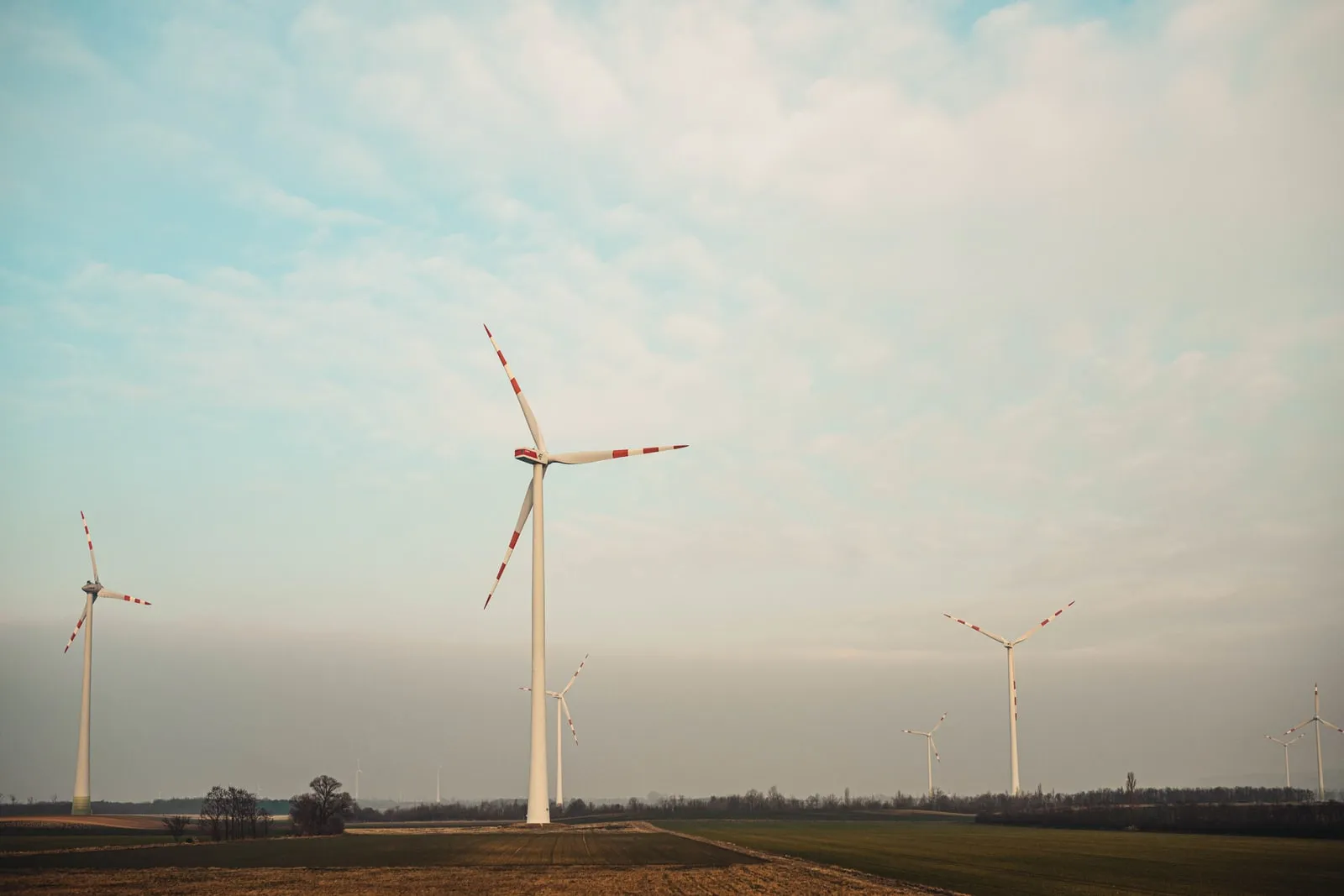
Hub-height wind, cloud cover and solar radiation are the inputs grid operators and traders use to schedule generation. A model that produces them hourly at a finer resolution is aimed squarely at electricity markets, not at deciding whether to carry an umbrella — and it lands as AI data centres are themselves becoming a serious source of load growth.
What to watch next
The number worth waiting for is an independent one. National meteorological services and academic groups run their own verification against operational forecasts, and those results, not the launch post, will show whether a 60% CRPS improvement holds up across seasons and regions. Watch too whether Google publishes the model or keeps it behind the API, as it has with previous WeatherNext releases.