What was committed
Biohub, the research nonprofit backed by Mark Zuckerberg and Priscilla Chan, announced on 7 October that its Virtual Biology Initiative has reached $1.8 billion in commitments, counting money, data, computation and measurement technology rather than cash alone.
The US Department of Energy is putting in more than $500 million over five years for laboratory measurement, modelling and computation, through its Genesis Mission. The National Institutes of Health is not adding new money but is coordinating datasets and repositories built with more than $500 million of earlier federal investment, which Biohub will standardise for AI training.
Biohub’s own founding commitment, made in April, is $500 million: roughly $400 million for new measurement and engineering technology and $100 million for research outside its own walls. Google DeepMind, Meta and the drug-discovery company Isomorphic Labs are together contributing $300 million.
The goal is a cell you can run
The target the initiative keeps returning to is a model that predicts how a cell responds to an intervention — a drug, a gene edit, a change in environment — across far more cell types and conditions than anyone has measured.
Alex Rives, Biohub’s head of science, calls it one of the most important challenges for the next era of science. Max Jaderberg, president of Isomorphic Labs, framed his company’s participation as helping build a large multimodal data foundation. Darío Gil, the Energy Department’s under secretary for science, described the arrangement as a new standard for open science.
Why the money goes to measurement
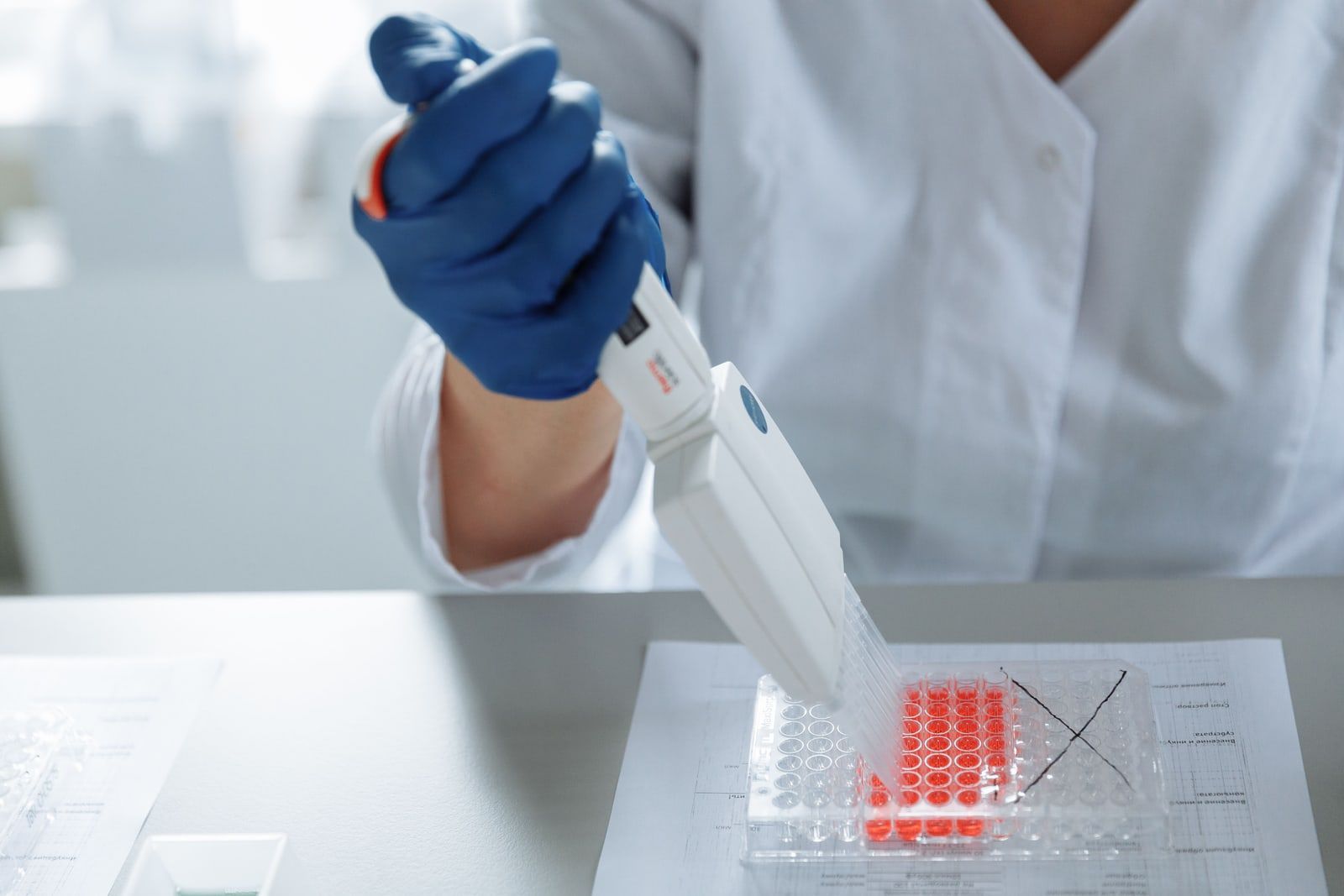
The interesting thing about this spending is where it is pointed. Roughly $400 million of Biohub’s own commitment funds instruments — technologies that expand what biologists can measure, at greater scale, speed and accuracy — rather than model training.
That is a specific claim about where the bottleneck sits. Language models had the web; protein structure prediction had the Protein Data Bank. A model of cellular response has no equivalent corpus, because most interventions in most cell types have never been run. If the diagnosis is right, the compute follows the data rather than leading it.
Nvidia is contributing accelerated computing and expertise, with no figure attached. Renaissance Philanthropy, the Allen Institute, the Broad Institute, the Gladstone Institutes, the Human Cell Atlas, the Human Protein Atlas and the Wellcome Sanger Institute are also named as partners.
The access question
Biohub describes the result as open to the research community, with shared standards, common identifiers and a single point of access. It does not state a licence or detailed access conditions.
The Decoder, citing Reuters, reports one condition that the announcement does not mention: commercial funders would get a year of exclusive access to the data they paid for before it becomes public, while government-funded work carries no such restriction. The same report puts the first dataset about a year out.
What to watch
Three things will show whether this is a data commons or a consortium. Whether the licence, when published, permits commercial reuse. Whether the one-year exclusivity applies per dataset or per funder. And whether the standardised NIH repositories arrive in a form that a lab outside the partner list can actually train on, which is the difference between open data and data that is merely available.