A machine five rivals agreed to share
Sferical AI announced on 15 October that AstraZeneca, Ericsson, Saab, SEB and Wallenberg Investments have launched Sferical One, a shared AI supercomputer in Sweden, with the bearing manufacturer SKF joining as a strategic partner.
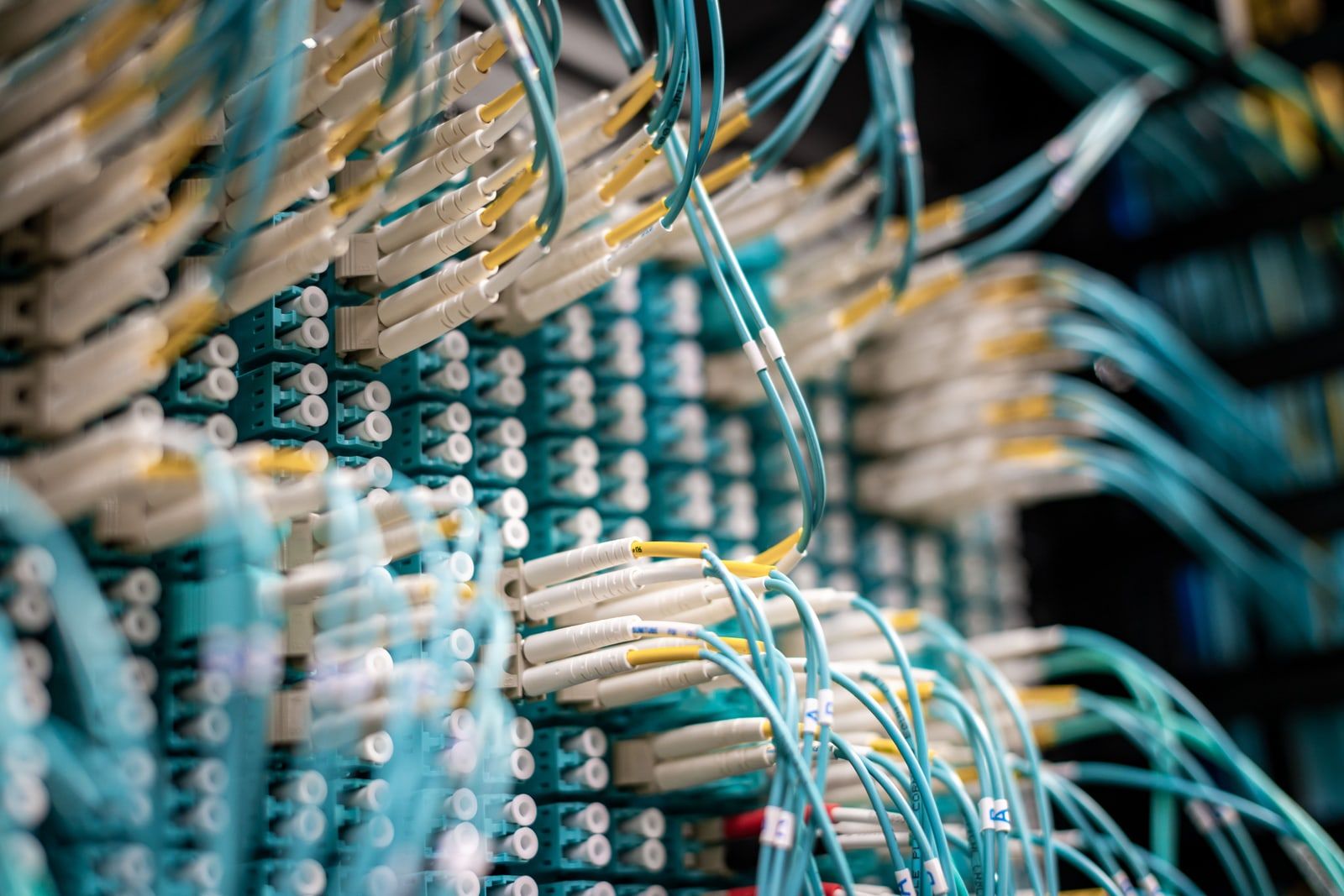
The hardware is an Nvidia DGX SuperPOD built on 16 Nvidia DGX GB300 systems. Sferical’s own release gives the system count but no total accelerator figure; NordiskPost and other coverage of the Stockholm launch put it at 1,152 GPUs across those 16 racks, a number the company has not itself published.
The machine is not new. Sferical says it has been running since late summer 2026, which makes this a launch announcement for something already in production — a reasonable way to avoid announcing a supercomputer that does not work yet.

What each member is doing with it
The named workloads are specific enough to be checkable, and they are not the same problem. AstraZeneca is using it for drug discovery, Ericsson for foundation models for telecommunications, Saab for defence applications, SEB for financial services, and SKF for predictive maintenance, quality control and research.
That spread is the point of the structure. None of these companies needs a frontier cluster continuously, and each would struggle to justify one alone; pooled, the utilisation problem largely solves itself. Sferical also plans services built on Nvidia’s open Nemotron multimodal models, and says the open weights let members inspect them, fine-tune for their own use cases, and run them in environments that meet their own security requirements.
That last clause is the actual product. Chief executive Jenny Nordlöw said Sferical One lets the companies train and run AI models at larger scale on a sovereign platform, and the data stays in Sweden — which is what makes the machine usable for the member whose work is defence and the member whose work is patient data.
Sovereignty as a procurement argument
Marcus Wallenberg, chair of Wallenberg Investments, described the project as a long-term investment in capabilities and expertise the companies will need to compete. Nvidia founder Jensen Huang, who attended the Stockholm launch alongside Deputy Prime Minister Ebba Busch, said Sweden has always built great things.
The sovereignty framing is doing real work here, and it is worth being precise about what it means. The compute sits in Sweden and the data does not leave, but the accelerators, the systems architecture and the open models the services are built on all come from one American vendor. Sovereign in this usage means jurisdictional control over data and siting, not independence from the supply chain.
Part of a larger European push
The launch sits inside a wider Nvidia campaign in Europe. Huang said during the Stockholm visit that the company has invested 8 billion dollars in Europe over the past year, and his European tour continues with a keynote at GTC Berlin on 21 October.
Swedish reporting has estimated the project’s cost at more than one billion kronor, roughly 95 million dollars. Sferical has not published a figure, so treat that as an outside estimate rather than a disclosed number.
What to watch
The question for shared infrastructure is always allocation: who gets the machine when two members want it in the same week, and whether the pooling survives the first conflict. Watch also for whether Sferical publishes utilisation or capacity figures, and whether more Swedish industrials join — a consortium of five is a club, and a consortium of fifteen is national infrastructure.