The hardware first
Meta published its 2026 OCP Global Summit networking round-up on Monday. The centrepiece is IceCube, a 102.4 terabit switch with 128 ports of 800G, built in a 2OU, PHY-less design and offered in two silicon variants: Broadcom’s Tomahawk 6C and Nvidia’s Spectrum-6. It sits in IcePack, which Meta describes as its first liquid-cooled network rack, with hybrid liquid and air cooling, and it runs FBOSS, Meta’s own network operating system.
Alongside it is Tahan, an Ethernet scale-up switch for the MTIA 300 rack system, based on the older Tomahawk 5. Meta previewed a design putting 72 accelerators in a rack on 102.4T silicon. The post gives no bandwidth or latency figures for Tahan, and no prior-generation comparison for most of what it describes.
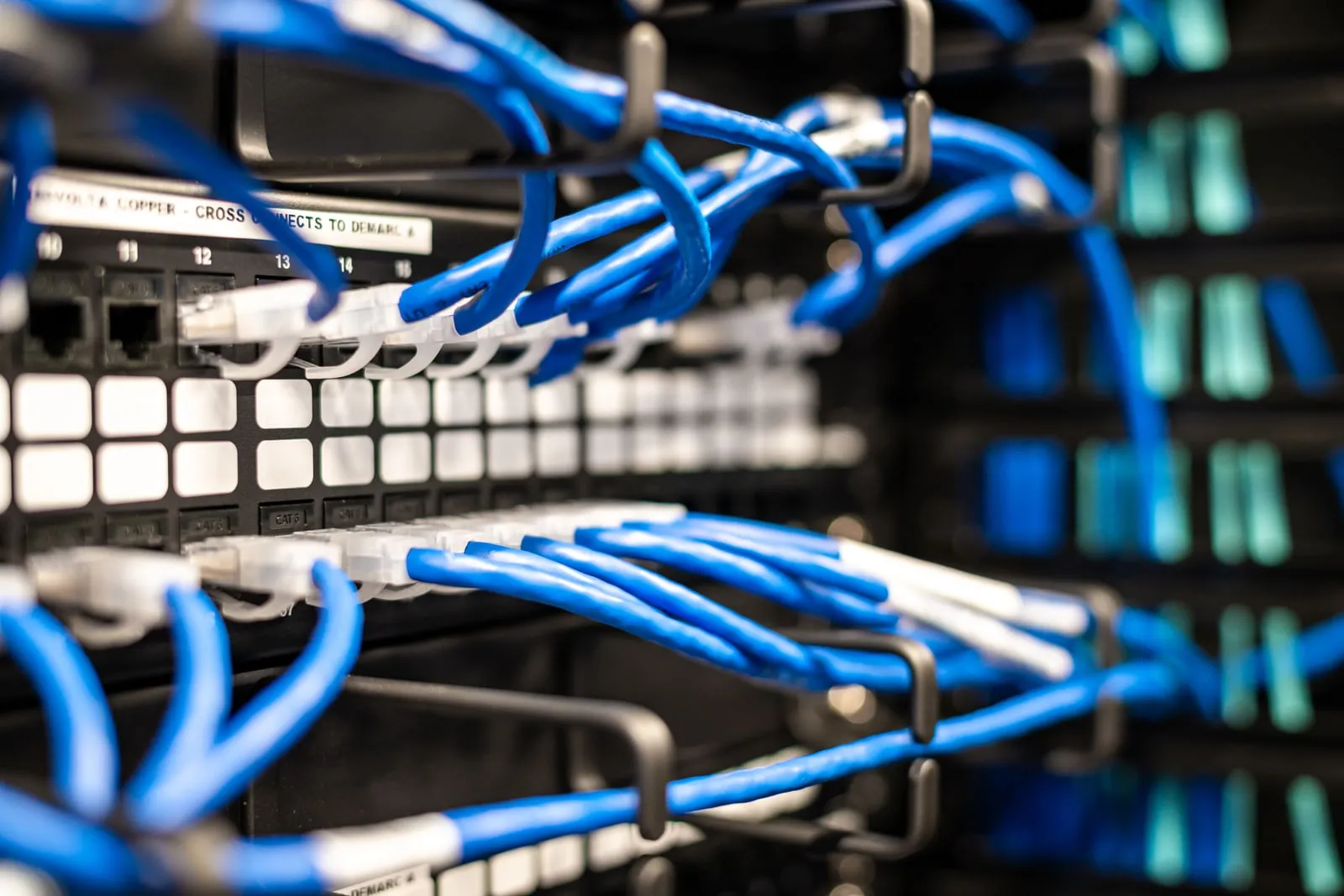
On optics, Meta reports validating 51.2T co-packaged optics and carrying the lessons into 102.4T, deploying 800G active electrical cables at scale, and making the case for linear pluggable optics, which drop the retimer DSP from each module.
Three fabrics, named by what they span
Meta organises the rest by distance. Scale-out is the Flattened Planar Fabric, built with Nvidia and shared with cloud partners: each GPU connects to eight network planes, the topology collapses from a three-tier to a two-tier Clos, and packet spraying moves to the NIC. Scale-across is BAG, a backend aggregation layer Meta calls a petabit-scale super-spine, linking buildings, campuses and regions inside Prometheus, the gigawatt-class cluster it described earlier this month. Underneath both sits a new SRv6 backbone on FBOSS and SAI, which Meta says went from concept to deployment in months using shallow buffers at wide-area distances.
The two things Meta is handing over
The hardware is Meta’s. Two other items are not, and they are the reason the post matters outside Menlo Park.
The first is MetaRoCE, Meta’s RDMA transport for AI Ethernet, which is going open source. A user-space implementation is on GitHub as libsoftmetaroce, with a DPDK-based version to follow. RDMA transport is the layer that decides how a training job’s traffic behaves when a link congests; publishing an implementation puts Meta’s answer in front of everyone building clusters on Ethernet rather than InfiniBand.
The second is OSPA, Open Switch Platform Architecture, a new OCP initiative to standardise the switch platform layer. Meta is co-leading it with Microsoft and Alibaba, and says a v1.0 specification has been submitted to OCP. Three companies that compete directly in cloud and in AI are writing one specification for the layer their switches sit on — which is what the Open Compute Project was built to do, and is still unusual to see named this explicitly.
Meta also reports progress on ESUN, Ethernet for Scale-Up Networking, moving from the 1.0 specification released earlier in 2026 toward 1.1.
What to watch is whether anyone outside Meta ships against the OSPA v1.0 specification, and whether MetaRoCE picks up implementers at cluster operators that have no reason to copy Meta’s hardware.