What was released
Inception, the startup founded by the Stanford, UCLA and Cornell researchers behind the first diffusion large language model, launched Mercury 2.5 on 8 September. The company calls it the largest diffusion LLM trained to date.
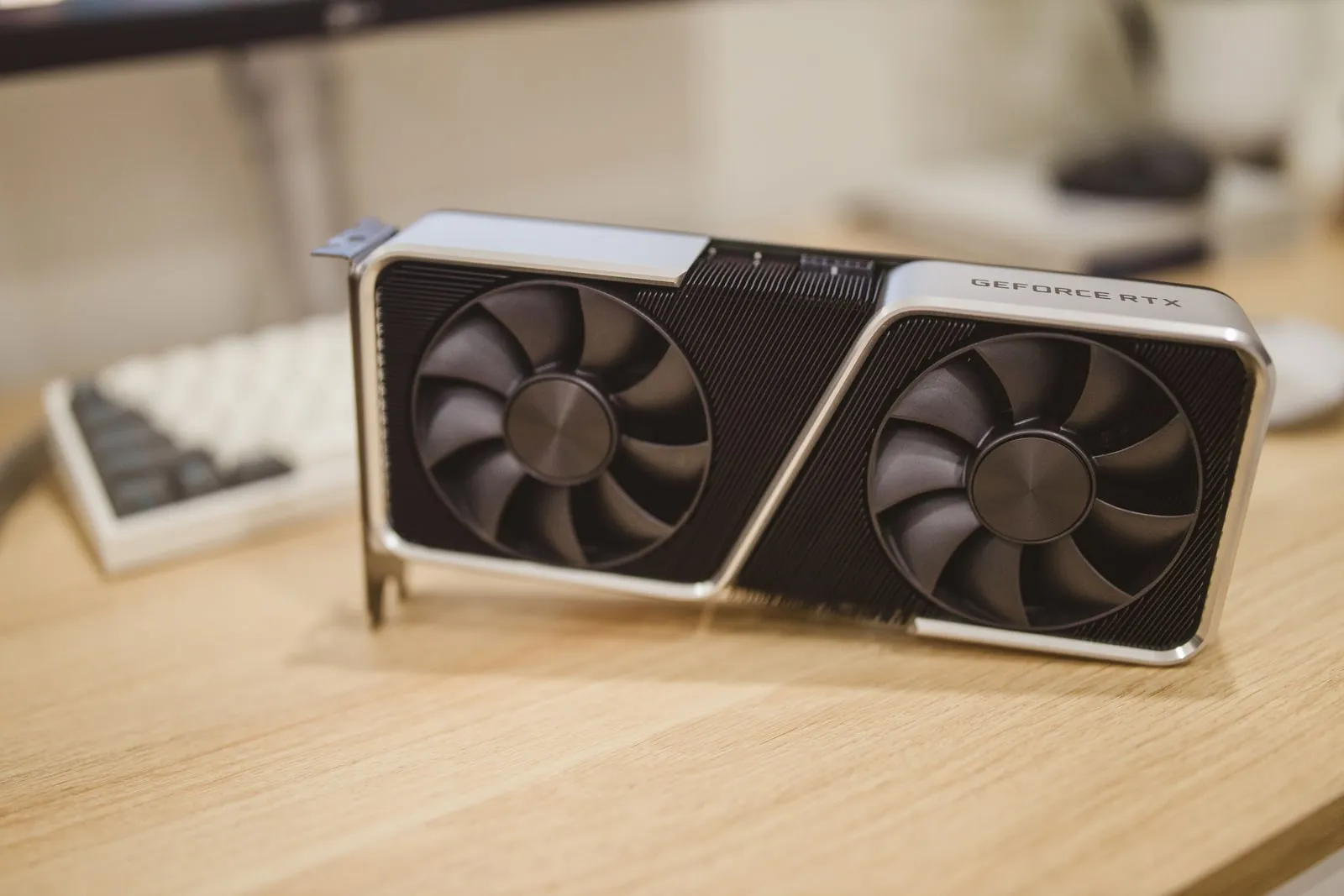
Inception says the model runs at over 1,100 tokens per second in production — AlphaSignal reports a figure of 1,107 — on standard Nvidia GPUs rather than specialised hardware, and that its context window has grown from 128,000 to 260,000 tokens. The model adds tunable reasoning, native tool use, a JSON mode and parallel tool calls.
On quality, the company says Mercury 2.5 scores ten points higher than Mercury 2 on the intelligence measure it cites, and describes the result as roughly a 40% improvement. It puts the model on a par with GPT-5.6 Luna and Claude Haiku 4.5. Those are Inception’s own numbers about Inception’s own model, and no independent evaluation was published alongside them.
Why diffusion is different
A conventional language model is autoregressive: it produces one token, conditions on it, produces the next, and so on. The sequence is the bottleneck, and everything the industry does to make inference faster — batching, speculative decoding, better kernels — works around that constraint rather than removing it.
A diffusion language model starts with a rough draft of the whole output and refines tokens in parallel across successive passes. That changes what the hardware is doing. It is why a company with far less capital than the frontier labs can post a throughput number several times theirs, and why the number is the headline rather than the benchmark score.
The price, and the customer it is aimed at
Standard pricing is $0.20 per million input tokens and $0.75 per million output tokens, with an 80% launch discount bringing that to $0.04 and $0.15. New users get 100 million free tokens. The model is available through Inception’s own API, OpenRouter and Baseten.

The customer this is built for is visible in the case study Inception published: an executive at OpenCall said its P99 response time fell from several minutes to one second after adopting Mercury, with median latency under 0.2 seconds. That is a voice-and-support workload, where a slow answer is a failed answer regardless of how good it is. Inception is backed by Menlo Ventures, Mayfield and Microsoft’s M12 fund.
What to watch next
Whether the quality claim survives outside evaluation. Diffusion LLMs have consistently traded accuracy for speed, and Haiku-class parity is a modest but real bar. Watch for the model appearing on an independent leaderboard, and for whether the 80% launch discount converts into sustained usage once it expires.