What Claude was asked to do
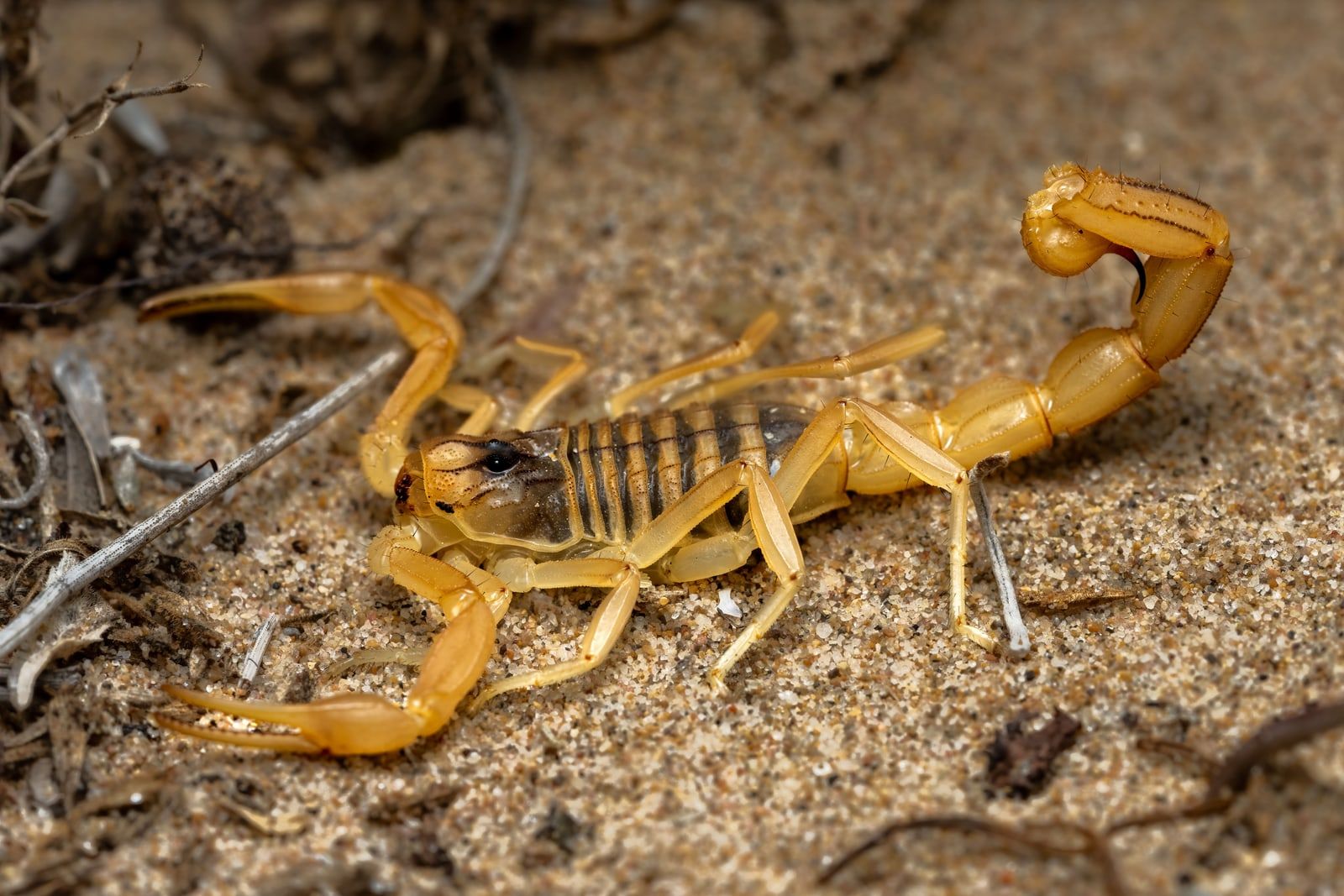
Anthropic has published an account of a protein design campaign run largely by an internal research model inside Claude Science, aimed at scorpion neurotoxins. The company sets out the stakes in its own framing: scorpion stings affect more than 1.2 million people a year and cause more than 3,250 deaths, mostly among children with limited access to medical care.
It is equally explicit about what it has not done. “We do not claim to have produced an antivenom,” the post says. What it claims is a set of minibinder candidates — small proteins that stick tightly to a target — and lab evidence that some of them stick.
The prompt was written with Citrini Research, a financial investment research firm, building on Anthropic’s earlier protein-binder work, and four follow-up prompts came later. The model then ran for 64 hours, working alone for the first 24 after the initial prompt, with humans supervising. It chose the toxin structures from the Protein Data Bank and the AlphaFold database, picked five hotspots per toxin, set its own quality thresholds and drafted the report.
The numbers behind the 17
Using 12 design tools and roughly 10,000 GPU hours, the run generated 318,484 designs and co-folded and screened 553,052 design-toxin pairs. Claude selected 180 of them for synthesis; the human team added 31 more, for 211 tested.
The targets were five toxins: Cn2 from Mexico, Ts1 from Brazil, AaH I and AaH II from North Africa, and LqhIII from the Middle East, each aimed at the toxin’s sodium-channel-binding site. The campaigns were split between single-toxin designs, pairs from the β family, trios from the α family, and 91 designs aimed at all five at once.
Testing was done by two outside companies. Adaptyv Bio used a cell-free expression system; Twist Bioscience expressed the designs in human kidney cells as Fc fusions. Both measured binding by surface plasmon resonance. A design counted only if it was a hit at both labs, held a dissociation constant of 1 µM or tighter in every replicate, and showed no signal against an unrelated control protein. LqhIII was tested at one lab only.
Seventeen of 211 cleared that bar: seven against Cn2, four each against AaH I and AaH II, and two against LqhIII. The single-toxin designs hit 18% of the time, which Anthropic describes as typical for protein design. Not one multi-toxin design met the criteria for more than a single toxin.

What has not been shown
The strongest two, Cn2-B1 and Cn2-B2, reached single-digit nanomolar affinities at both labs, and competition experiments suggest they share or overlap the binding site of an antibody previously reported to neutralise Cn2 in mice.
Everything after that is open. The designs were tested against recombinant toxins, not toxin purified from venom. Neutralisation has not been shown in cells or in animals. Safety, stability and cost are untouched. Two outside researchers quoted by Anthropic, Susana Vázquez Torres and Timothy P. Jenkins, called the work a promising first step.
One footnote deserves attention from anyone reading the 64 hours as the headline: Anthropic reports that a far simpler setup — one agent, one GPU, 24 hours — reached comparable scores in silico. All 211 designs and their data have been released on Hugging Face, so the next test is whether anyone outside Anthropic can take Cn2-B1 into cells.