A federal agency on the credit list
Anthropic expanded its AI for Science programme on 28 October to 20 foundations, institutions and research groups. Most of the names are what you would expect from a free-credits programme: the Alfred P. Sloan Foundation, the Simons Foundation, Schmidt Sciences, the Open Source for Science Fund.
One is not. The US National Science Foundation is on the list of science funders receiving Claude credits to distribute to researchers. The NSF supports roughly a quarter of federally funded basic research at American colleges and universities, which makes it the largest single distribution channel in the programme and the only one that is a government agency.
Who gets what
The partners fall into three groups. Funders and societies get credits to pass on: Sloan, Simons, Schmidt Sciences, the Open Source for Science Fund, the NSF, and CAS, a division of the American Chemical Society.
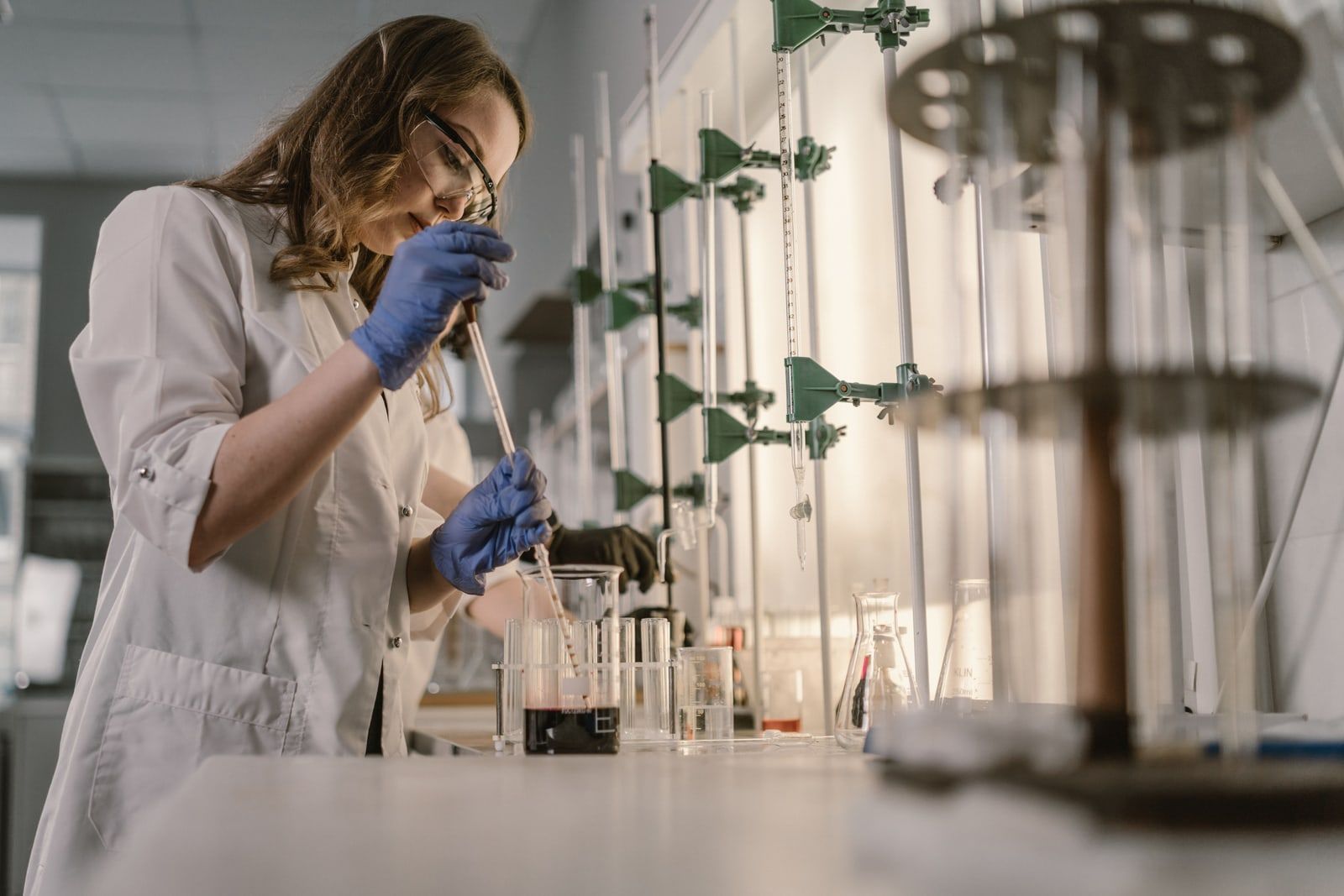
Institutions get credits to use internally: the Space Telescope Science Institute, the Wellcome Sanger Institute, the Francis Crick Institute, Imperial College London’s Department of Life Sciences, EMBL including EMBL-EBI, and the Gladstone Institutes.
Individual projects get credits directly: FlyWire at Princeton, which maps fruit fly brain wiring; LEAP at Columbia, an NSF centre working on climate models; AstroPath at Johns Hopkins, on cancer imaging; gnomAD at the Broad Institute, which holds genetic variation data from more than 800,000 people; Tau Ceti, an open Lean mathematics library; and the Centre for Population Genomics in Australia, run by the Garvan Institute and Murdoch Children’s Research Institute.
A note on the count: the announcement says 20 partners and names 18 across those three lists. Anthropic also mentions HHMI Janelia Research Campus and the Allen Institute in the text without placing them in a list, which may or may not be the difference.
The part that is not credits
The more consequential item in the post is a specification. The Model Hardware Standard, developed with HHMI Janelia Research Campus, is a shared standard that lets AI agents safely operate laboratory instruments. It is in research preview.
Giving an agent credits to read a dataset is a procurement decision. Giving it a standard interface to a microscope, a sequencer or a liquid handler is a different category of thing: it moves the agent from analysing results to producing them, and puts the safety question on the instrument rather than on the text. Anthropic has not published the specification’s safety model in the announcement, and “safely” is doing unexamined work in a sentence about machines that can spill, heat and dispense.
Anthropic also says the Allen Institute is running teams of agents over its large open datasets, and describes that as cutting months of manual analysis to hours. That is the institute’s work and Anthropic’s characterisation of it; no measurement is attached.
Why a credits programme matters at all
AI for Science started in May 2025 and Anthropic says it has supported hundreds of projects across biology, medicine, physics, chemistry, climate science and mathematics. The mechanism is simple and the effect is not neutral: a lab that gets credits runs on Claude, and the comparison a researcher would otherwise make between vendors does not get made.
That is the standing trade in every free-tier research programme, and it is worth stating each time rather than treating as background. It is not an argument against the programme. It is the reason an agency distributing the credits is a bigger step than a foundation doing the same.
What to watch
The Model Hardware Standard leaving research preview, and what it says about permissions and failure modes when it does. A shared interface between agents and lab instruments is the kind of thing that becomes infrastructure quietly, and the safety properties it ships with are the ones everyone inherits.