A rack built for the part of the work that is not inference
AMD used the Open Compute Project’s Global Summit on Monday to introduce Helion, an open rack-scale reference design aimed at agentic AI. The headline configuration is unusual for an AI announcement in 2026: it contains no accelerators.
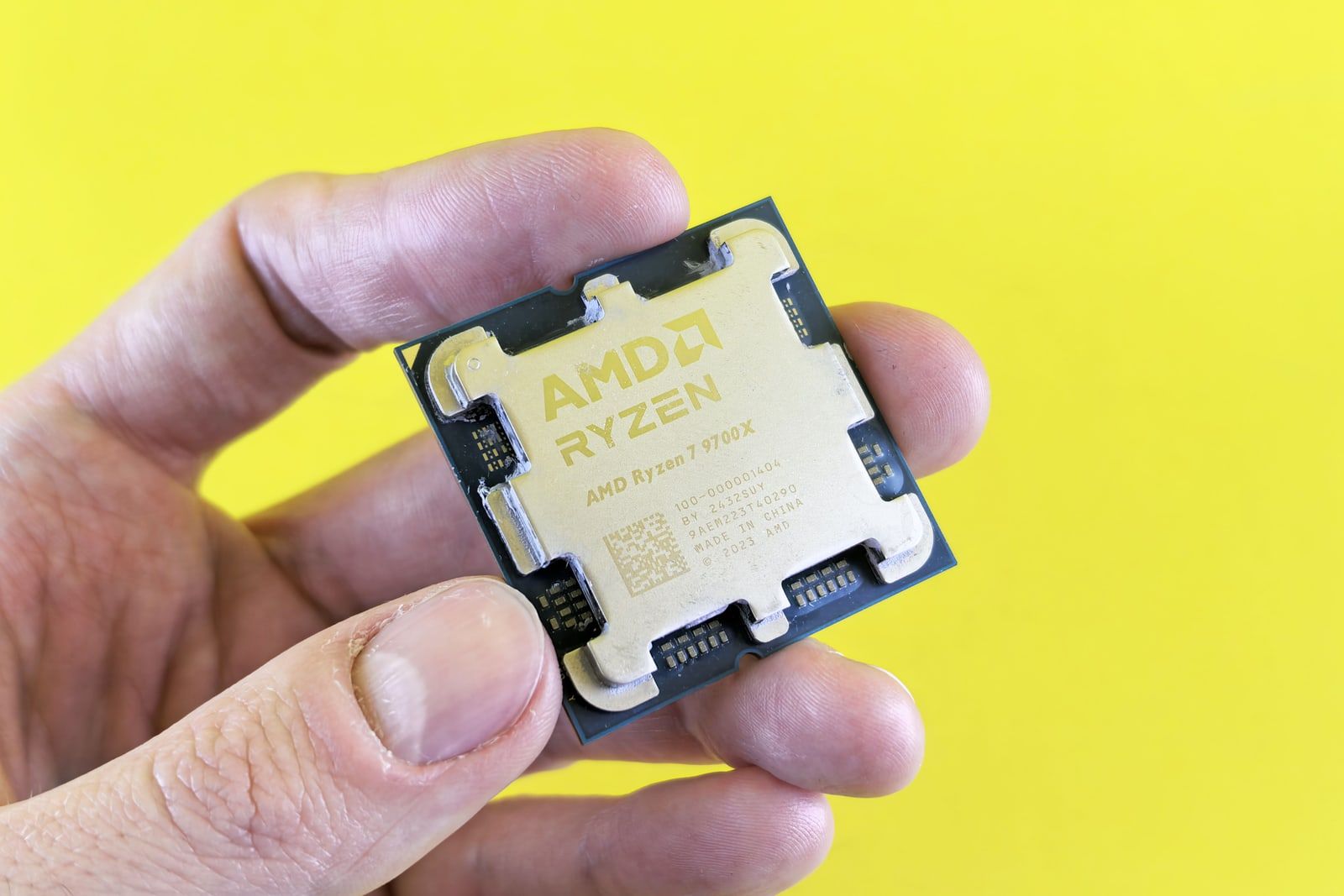
In the CPU-only form, as The Register reported from the summit, a Helion rack carries up to 32,768 Zen 6 cores, built from compute nodes using 256-core Venice EPYC processors. That capacity is meant for agent execution — the orchestration, tool calls, file handling and retries that surround a model — with inference served from separate infrastructure.
The second configuration is for enterprises that would rather not split the two. It mixes CPU blades with up to 16 Instinct MI350P accelerators and handles agent execution, GPU inference and supporting workloads in one enclosure. AMD quotes up to 102Tbps of networking bandwidth, and says both configurations can be air-cooled or liquid-cooled.
The blade menu
AMD describes three CPU blade types rather than one. A dense blade uses EPYC 9006 parts rated at 400W, a performance blade uses a 96-core chip clocked at 5GHz, and a balanced blade uses the 256-core parts at 600W. GPU inference blades hold eight MI350P accelerators in a 5U chassis, and general-purpose blades cover database, storage and technical computing work.
That spread is the argument. Dan McNamara, an AMD senior vice-president, framed agentic AI as spanning enterprise applications and complex workflows with varied compute needs, which is a way of saying the bottleneck is not always the model.
AMD is not selling it
Helion is a reference design AMD says it will contribute to the Open Compute Project, not a product AMD ships. Server makers build it. The Register lists Cisco, Dell, HPE, Foxconn, Lenovo and Supermicro among the partners, with configurations scheduled for November 2026.

That date is worth noting, because Tom’s Hardware reports AMD had previously said the rack would ship in the first half of 2027 and has pulled it forward. Some earlier coverage still carries the old timing.
Helion is not Helios
The naming invites confusion. Helios, which AMD launched earlier in 2026, is the rack for frontier-scale training and large inference runs. Helion is the one that combines agent execution with inference, and leans on CPUs rather than accelerators.
The design also sits inside the OCP’s modular hardware standards, which is the part that determines whether it matters. A reference design contributed to OCP competes on whether ODMs pick it up and whether buyers want racks they can source from six vendors rather than one. The thing to check in November is which of the named partners actually ships, and in which of the two configurations.