Classification by diffraction
Researchers at UCLA have built a hybrid optical-neural processor that detects manipulated video by passing frames through engineered diffractive layers rather than running them through a graphics processor. The work, by Parnian Ghapandar Kashani, Shiqi Chen and Aydogan Ozcan of UCLA’s electrical and computer engineering and bioengineering departments and the California NanoSystems Institute, was published in the journal eLight.
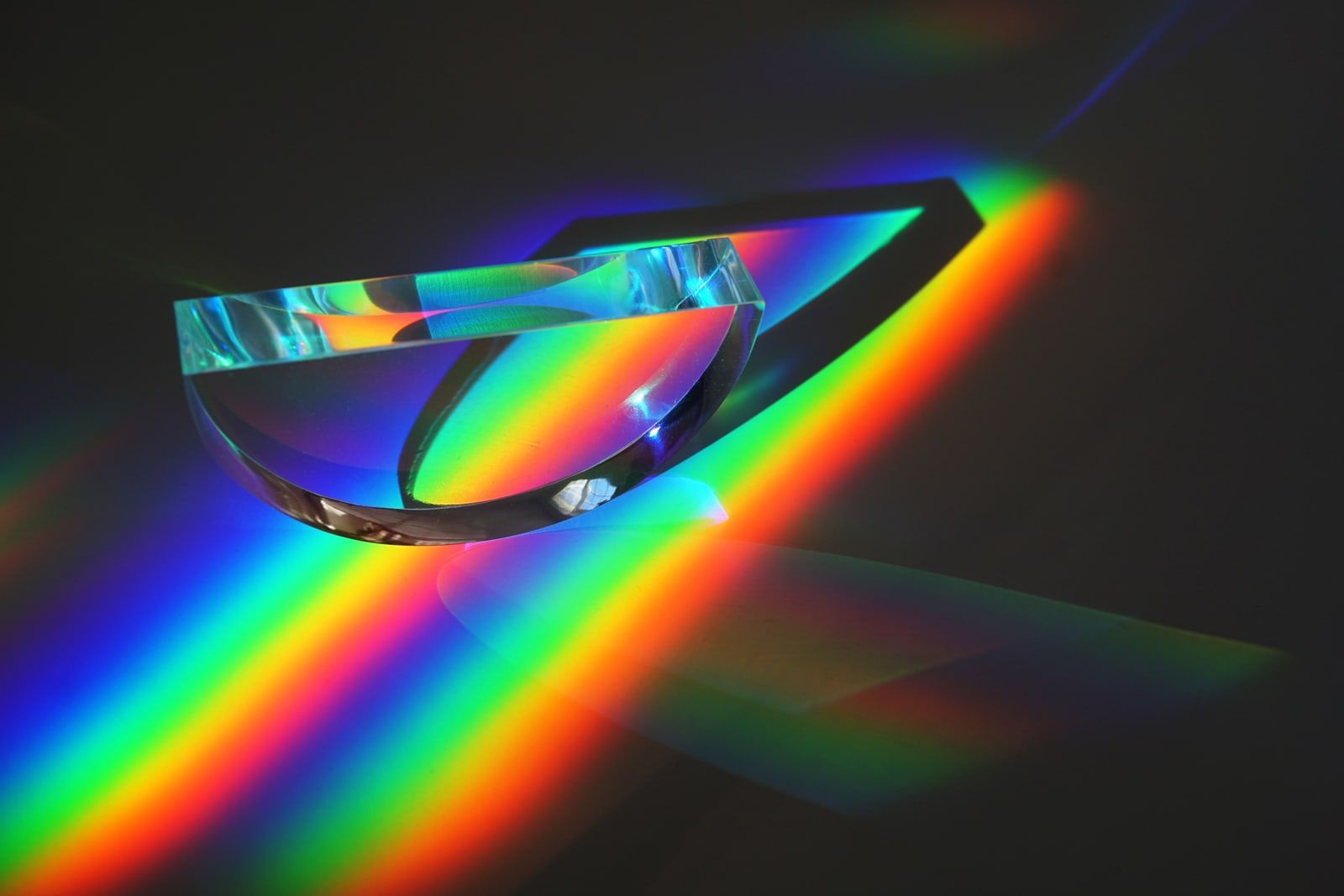
The mechanism is the interesting part. Light carrying the video frames passes through a set of layers whose surface structure has been optimised so that diffraction itself performs most of the computation. The optics do the heavy work; a small electronic stage reads the result. The computation happens at the speed of light passing through a few millimetres of material, and the energy cost is whatever it takes to illuminate it.
The numbers reported
The team reports average detection accuracy of 97.79 per cent, with sensitivity of 99.86 per cent and specificity of 95.72 per cent, while screening at least 15 video streams in a single optical pass. Pushed to 18 streams in one pass, average accuracy held at 96.13 per cent.
The asymmetry between those two figures is deliberate and is the design argument. Sensitivity of 99.86 per cent means an average false-negative rate near 0.14 per cent: manipulated video is very rarely waved through. Specificity of 95.72 per cent means roughly one in twenty authentic videos gets flagged anyway.
For a screening stage, those are the right way round. A filter that passes almost no fakes and over-flags some genuine footage hands a manageable pile to a slower, more accurate digital detector behind it. A filter tuned the other way would be worse than useless.
What the researchers claim, and what they do not
The authors position the chip as “a highly sensitive first stage of a larger detection system” for content moderation and media authentication, not as a replacement for digital detectors. That framing matters, because the history of deepfake detection is a history of results that held until the generators were retrained against them.
Nothing published says how the processor performs against generation methods that did not exist when its diffractive layers were optimised, and a physical optical element cannot be patched the way a model can be fine-tuned. The layers are fabricated. Re-tuning means fabricating again.
What it does change is where the cost sits. Platform-scale moderation currently means running every uploaded video through a model on a GPU; fifteen streams in one optical pass is a different unit economics, and that is a stronger argument than the accuracy figure.
What to watch is an independent replication against current generators. Detection results are perishable in a way that accuracy percentages do not convey.