What Nvidia announced
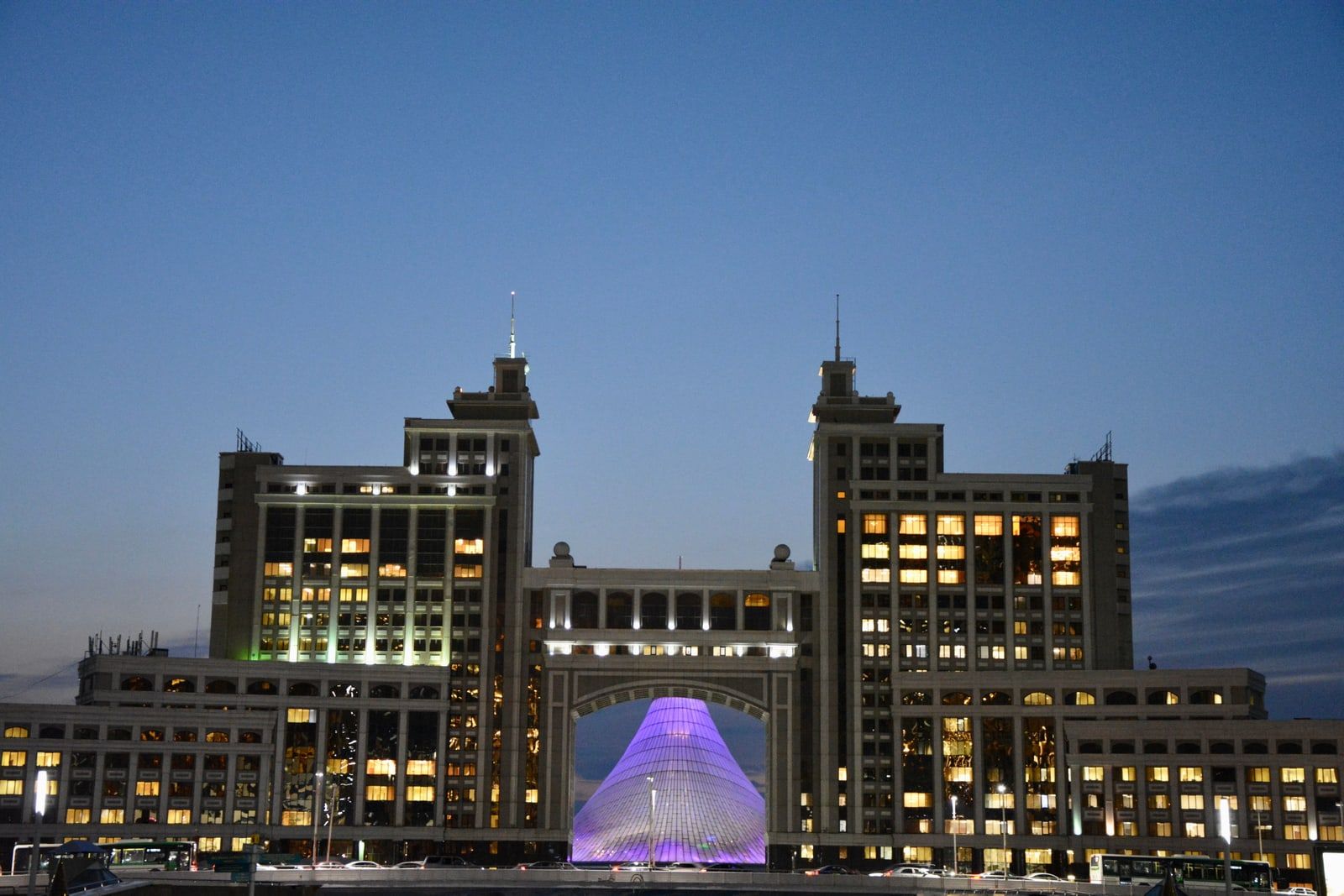
Nvidia said on Friday that Firebird, the AI infrastructure company that built its first AI factory in Armenia, has secured a United States export licence for 45,000 Nvidia Grace Blackwell GPUs for Kazakhstan. The announcement came as founder and chief executive Jensen Huang visited Astana on 23 October, meeting President Kassym-Jomart Tokayev at the Akorda Presidential Palace and appearing at a fireside chat with Deputy Prime Minister Zhaslan Madiyev, the country’s minister of AI and digital development.
Firebird’s first phase is under construction with Kazakhtelecom at a site Nvidia calls Data Center Valley, with commercial launch targeted for the third quarter of 2027. A planned second phase would take Firebird’s total potential capacity in the country to approximately 500 megawatts. The company also plans a Firebird Labs Kazakhstan to fund local startups and research.
An investment agreement was signed at the presidential palace. Nvidia’s post does not attach a dollar figure to it.

The gap between the licence and the hardware
The 45,000-GPU export licence is a permission, not a delivery. The compute actually installed in Kazakhstan today is considerably smaller, and Nvidia gives the number itself: Kazakhtelecom, the country’s largest telecommunications company, has deployed 400 Nvidia H200 and 480 Nvidia B300 GPUs across Astana and Almaty. That is 880 accelerators.
Kazakhtelecom’s own plan for next year is more than 1,000 GPUs at Data Center Valley plus more than 1,000 Nvidia Vera Rubin GPUs in the Ekibastuz region — still, on those figures, under 5% of the licensed Firebird volume, and in a different programme.
The 500MW figure carries the same qualifier. It is “total potential” capacity across a first phase under construction and a second phase that is planned, with the first of the two not due to open commercially for another three quarters.
An investment with no number
Nvidia said during the event that it is making an investment in Higgsfield AI, a Kazakhstan-founded generative media startup that is expanding its infrastructure with Vera Rubin running on cloud service providers. The size of the investment is not disclosed, and nor is the valuation.
“The first thing and the last thing is you invest in people, not companies,” Huang said of the founders.
Firebird’s co-founder and chief executive Razmig Hovaghimian was more specific about the timeline than the money: “What began as a seed of an idea 180 days ago has grown into a major investment in Kazakhstan’s AI future.”
What else was on the table
Two other items came out of the visit. The ride-hailing company inDrive and the autonomous driving company Pony.ai said they will assess bringing Pony.ai’s seventh-generation robotaxis to the inDrive app, built on Nvidia’s Hyperion sensor and compute platform with the Halos safety system, with Astana as the first deployment city. That is an assessment of feasibility, not a launch.
Huang also described OpenShell, Nvidia’s approach to containing AI agents by limiting their access to files and tools and monitoring their activity — a notable thing to raise in a sovereign-compute context, where the customer is a government.
Tokayev gave Huang an honorary judo black belt and the Order of Dostyk, First Class. “Your country’s data is your natural resource. It belongs to you,” Huang told the audience. Madiyev said Kazakhstan wants AI that “understands and speaks Kazakh”.
The thing to watch is the export licence. A US permission for 45,000 Grace Blackwell GPUs destined for Central Asia is the substantive fact in the announcement, and the test of it is whether the Q3 2027 date holds.