An open world action model trained on human video
Nvidia introduced GR00T 2 at the Conference on Robot Learning in Austin on 9 November, describing it as an open frontier world action model built on Nvidia Cosmos. In its announcement, the company said the model was trained on robot and human data including 100,000 hours of its own open-source human egocentric footage, and that it learns from human demonstrations and transfers skills between different robot bodies without robot demonstrations.
The headline numbers are Nvidia’s own. The company said GR00T 2 achieved 71% average success across 50 tasks with just one demonstration per task, rising to 95% with five, and that it completed 40 of those 50 evaluated tasks at least once without task-specific demonstrations. None of those figures has been independently reproduced.
Among the top three, not at the top
On the public leaderboards Nvidia cites, the claim is more measured. The company said GR00T 2 “currently ranks among the top three models across all vision language action and world action model categories” for the RoboCasa365, RoboLab, RoboDojo and MolmoSpaces benchmarks, with multiple leaderboard wins. That is a statement about a band of results rather than a clean first place, and the distinction matters in a field where every vendor publishes its own evaluation.
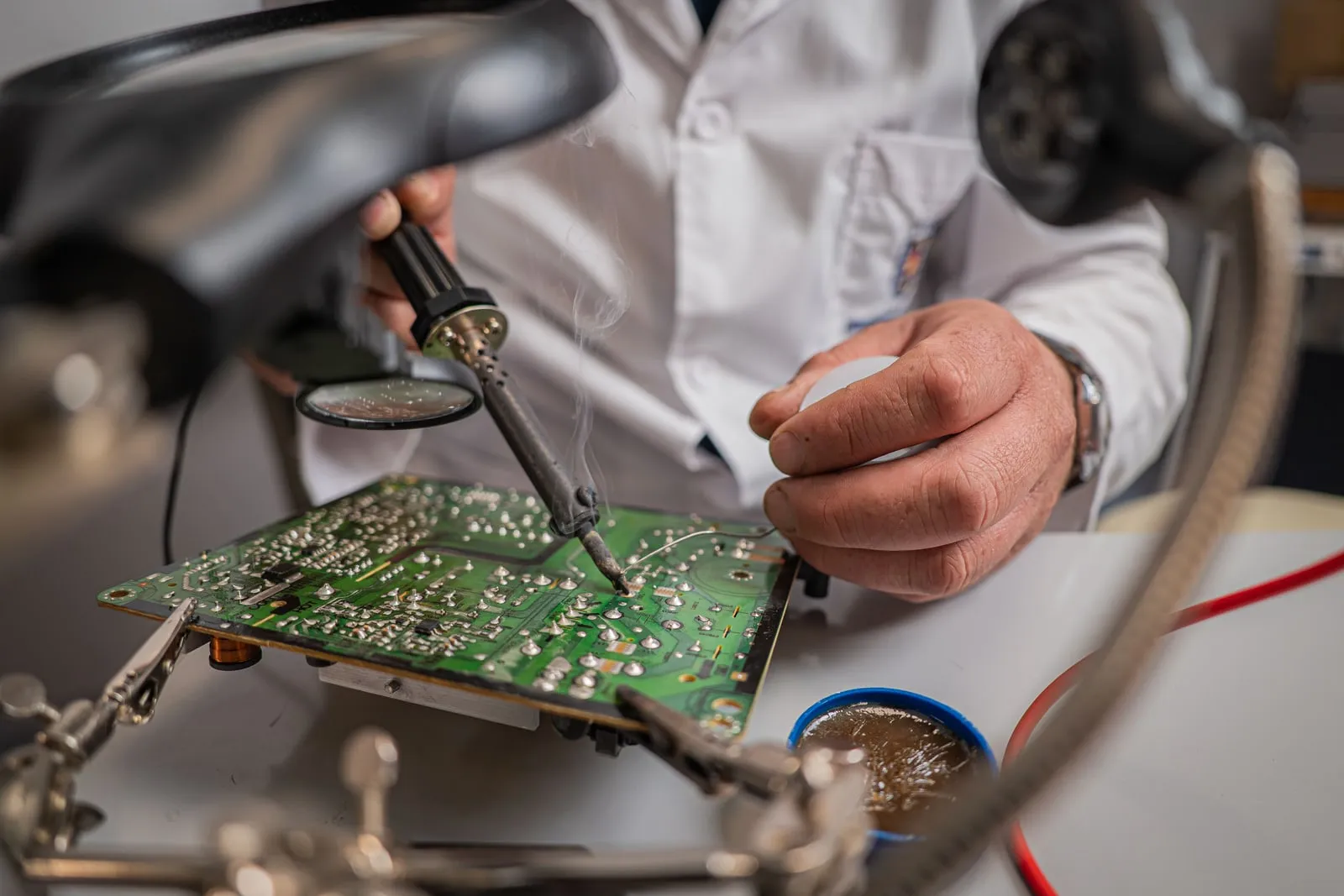
Four companies are named as testing the model. Nexuni is trying it on robotic laundry handling, Foxconn on factory automation for server manufacturing, and Siemens across industrial use cases. MicroAGI is using a version post-trained through reinforcement learning to swap Ethernet cables with a YAM robotic arm, automating the creation and calibration of the simulation environments it trains in. These are trials; Nvidia gives no deployment timeline for any of them.
The simulation stack around the model
A pretrained model is only half of it. Nvidia released Isaac Lab 3.0 at the same conference, adding agent-assisted setup of training environments, a switch between the PhysX and Newton physics solvers, a choice of renderers for perception-based training, and a reinforcement post-training library aimed at foundation models like GR00T. On a vision-based dexterous manipulation benchmark, the company said Isaac Lab 3.0 with Newton reached up to 2.5 times the training throughput of Isaac Lab 2.3 with PhysX.
Tighter integration with Newton, an open-source physics engine, lets Isaac Lab model deformable objects such as cables and cloth, and articulated systems such as robotic hands with many interacting joints — the physics that matters for the manipulation tasks the model is pitched at. Isaac Lab-Arena 0.4, for scaled policy evaluation, is in developer preview.
New benchmarks, and two paper finalists
Nvidia also announced two open benchmarks built with partners. DexBench, with RLWRLD, covers 15 tasks across four scenes and is in early access with Genesis AI, mimic robotics and others. VABAR, with UC Berkeley, holds six industrial tasks with standardised variations, difficulty tiers and success metrics.
Two Nvidia papers are among six finalists, out of thousands of submissions, for the conference’s Best Paper Awards: GRAIL, a generation pipeline for 3D assets and simulator-ready scenes, and RoboTTT, which the company says scales visuomotor context three orders of magnitude beyond current policies without increasing inference latency. Separately, Nvidia described AlphaNIST, in which a single policy learns all 20 tasks on the NIST Assembly Task Board with over 98% training success against 81% for per-task policies, using about 39 times less GPU time.
EgoHand, an open model that reconstructs 3D hand motion and was trained with Noitom Robotics data, has passed 40,000 Hugging Face downloads in the two weeks since launch, according to Nvidia.
The number to watch is the gap between 71% and 95%. Four extra demonstrations per task is the difference between a model that mostly works and one a factory would accept, and whether that gap holds on other people’s robots is the question the benchmarks Nvidia just released are meant to answer.