The weights, and the string attached
Mistral Large 4 — which Mistral calls Le Chonk — is now downloadable. Hugging Face published the release on 29 October with official FP8 and NVFP4 checkpoints, GGUF conversions from Unsloth and the llama.cpp team, and day-zero support in Transformers, vLLM and llama.cpp.
The licence is not a standard open-source one. Hugging Face describes the Mistral Ecosystem Open-Weight License as an MIT derivative that establishes limitations for model-as-a-service offerings — which is to say you can take the weights and build on them, but reselling the model as a hosted service is where the terms start to bite.
There is also a small discrepancy worth noting. The post’s introduction gives the model as about 1T total parameters with 49B active, while the official checkpoint is published as Mistral-Large-4-1T-A52B. Both figures come from the same release page.
What it runs on
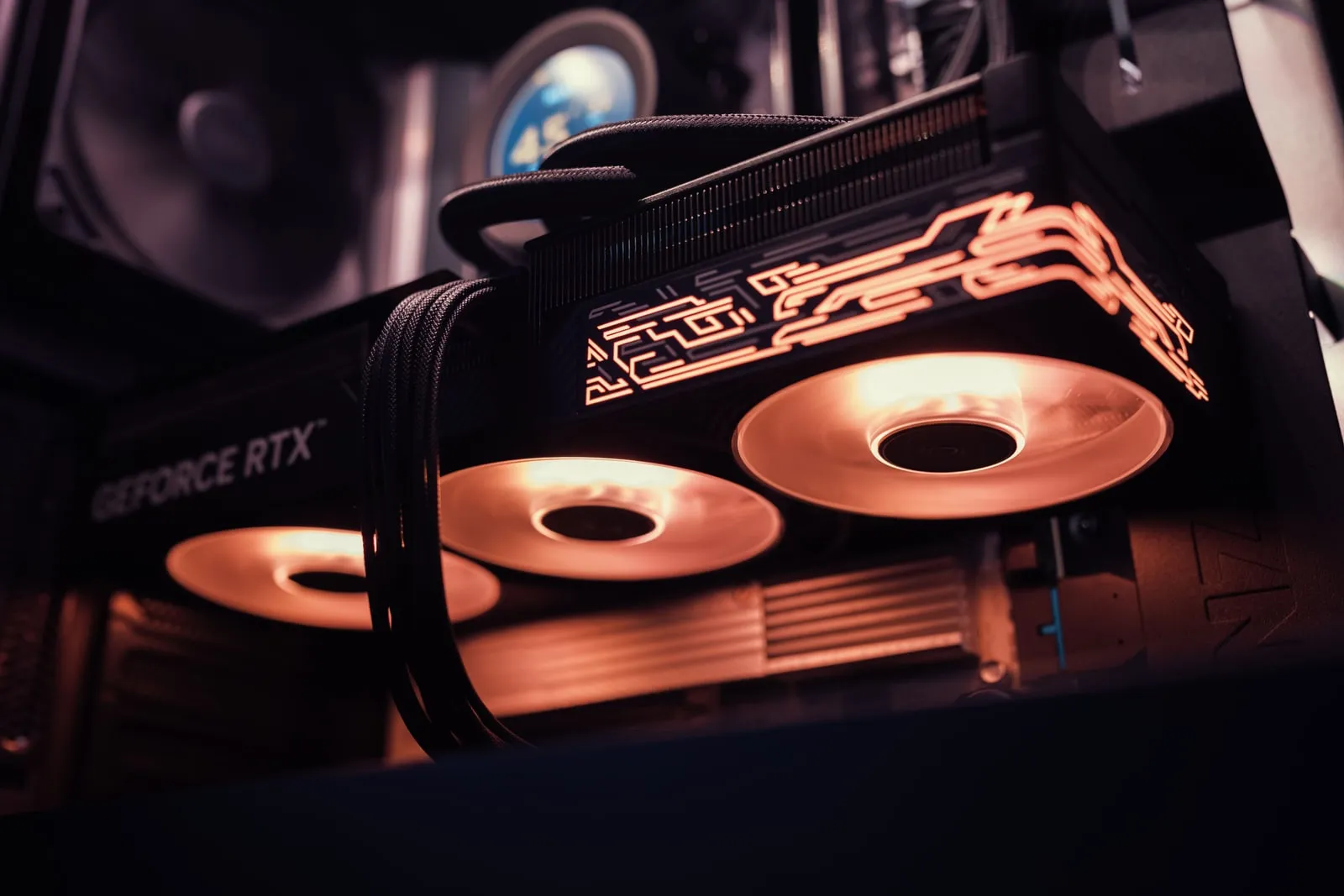
The more useful numbers are the throughput ones, because they say who can actually run this. Hugging Face reports that the 2-bit quantisations fit on a single Apple Silicon Ultra machine with 512GB of unified memory, and that running Q2_K on one M3 Ultra gave roughly 90 tokens per second of prefill and 15 tokens per second of generation. Everything heavier needs distributed inference.
On four RTX 6000 Pro cards, the post reports NVFP4 at 32K context with prefill between 130 and 590 tokens per second and generation around 10, and IQ2_XXS at 800K context managing 500 tokens per second of prefill and 30 of generation at short lengths — dropping to 129 and 3 at long ones.
On eight H200s through Hugging Face’s own Inference Endpoints, a single request showed a time to first token of about 0.6 seconds on a 1,000-token prompt and about 65 tokens per second of generation, rising to 120–138 when the model’s built-in DSpark draft head was accepted. Under load across 1,000 ShareGPT conversations, total generation was about 480 tokens per second.
The architecture
The text decoder has 72 layers, a hidden dimension of 6,144 and 64 attention heads. Attention combines Multi-head Latent Attention with a DeepSeek Sparse Attention indexer that selects up to 2,048 key positions per query, and the layers alternate three using rotary position embeddings to one using none. The first decoder layer is a dense feed-forward network; the other 71 are mixture-of-experts blocks whose router picks four of 128 experts per token, with one shared expert always running alongside. Vision comes from a 1.6B Pixtral encoder.
Reasoning effort is settable to low, medium or high. It cannot be turned off; the default is high.
The scores, and who reported them
On coding, Hugging Face reports 61.7% on DeepSWE v1.1, 59.4% on SWE-Atlas-QnA and 28.3% on Terminal-Bench 4, with a combined Coding Agent Index of 49.8%. On knowledge work it gives 59.9% on AutomationBench and 1,393 Elo on AA-Briefcase.
The security numbers are the ones Mistral has pushed hardest: 82% on the vulnerability reproduction and patching test within the Artificial Analysis Cyber Index, described in the post as the highest reported score on that test, and 93% of 40 Cybench challenges. Lakera’s B3 prompt-injection benchmark is given as 93.3% attack resistance.
One independent placement is worth holding onto against the rest: as of 29 October, Artificial Analysis listed Mistral Large 4 as the fifth best open-weights model on its intelligence index. Fifth, with the weights in public, is a different proposition from first behind an API.