A launch contract, and a date
Blue Origin and Google have signed a launch services agreement for Project Suncatcher, Google’s effort to put machine-learning compute in orbit. Blue Origin said the flight is targeted for the first quarter of 2029 and will be Google’s first dedicated heavy-lift launch for the programme, carried by the New Glenn rocket.
The mission is designed to deploy satellites “each with computing capacity at roughly the scale of a data center rack” into sun-synchronous orbit. Google’s own post describes the deal as building on existing work with other satellite and launch partners.
“Project Suncatcher represents the ambitious missions New Glenn was built to support,” said Jordan Charles, senior vice-president of New Glenn at Blue Origin. Travis Beals, who directs Suncatcher at Google, called the dedicated launch “a crucial milestone on our roadmap”.
Why orbit, according to Google
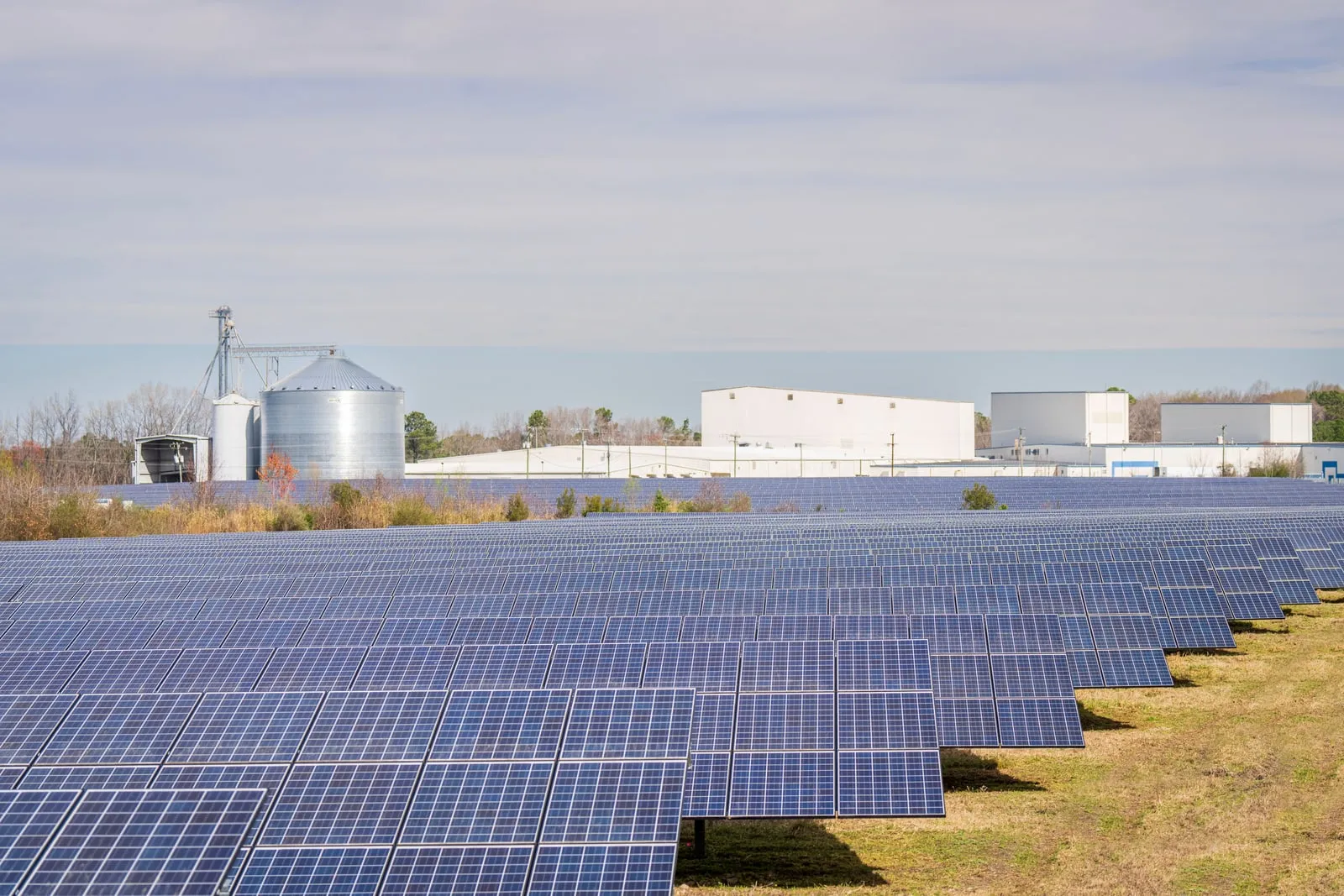
Google’s research blog sets out the case. In the right orbit, it says, a solar panel can be up to eight times as productive as on Earth and generate power nearly continuously, which cuts the need for onboard batteries. The proposed system is a constellation of networked satellites in a dawn–dusk sun-synchronous low Earth orbit, carrying Google TPUs and linked by free-space optical connections.
That design has unusual consequences. To get enough received power for high-bandwidth optical links, Google says the satellites have to fly within kilometres — in its modelling, hundreds of metres — of one another. It published an illustrative 81-satellite configuration at a mean cluster altitude of 650 km with a cluster radius of one kilometre, and says a bench-scale demonstrator has already run 800 Gbps each way, 1.6 Tbps in total, through a single transceiver pair.
The company also exposed Trillium, its v6e Cloud TPU, to a 67 MeV proton beam. High-bandwidth memory was the most sensitive part and began showing irregularities after a cumulative 2 krad(Si), which Google notes is nearly three times the shielded five-year mission dose it expects of 750 rad(Si). It reported no hard failures attributable to total ionising dose up to 15 krad(Si) on a single chip.

What is still unsolved
Google has been explicit that the hard parts are not finished. Its own analysis lists thermal management, high-bandwidth communication back to the ground and on-orbit system reliability as outstanding engineering challenges, while arguing that nothing in the concept is ruled out by physics or economics.
The 2029 flight is not the first thing to launch. Google said earlier that its next milestone is a learning mission with Planet, with two prototype satellites due to launch by early 2027 to test the models, the TPU hardware and the optical inter-satellite links in orbit.
Blue Origin, meanwhile, is working through an anomaly of its own: the company has been publishing updates on a hotfire investigation since 10 November. The gap between that and a first-quarter 2029 payload is wide, but a dated heavy-lift booking is the firmest commitment Suncatcher has had so far.