The problem the paper starts from
If you run the same long-horizon agent on the same task eight times, you do not get eight similar answers. A paper posted to arXiv on 5 October reports final scores spread between 68.3 and 100 across eight independent runs, and the spread did not close when the runs were given more compute.
The authors — Ziyang Cai, Christos Ziakas, Vasilis Kontonis, Tim Pearce, Siddhartha Sen, Akshay Krishnamurthy, Shivam Garg and Dimitris Papailiopoulos — attribute this to what they call “idea basins”. Grouping the artifacts a run produces by functional similarity, they find each run circling a localised region of the solution space. Once a run is in a basin, more steps mostly produce more variations of the same idea. The Decoder, which reported the work on Monday, describes it as Microsoft Research.

What forking and flushing does
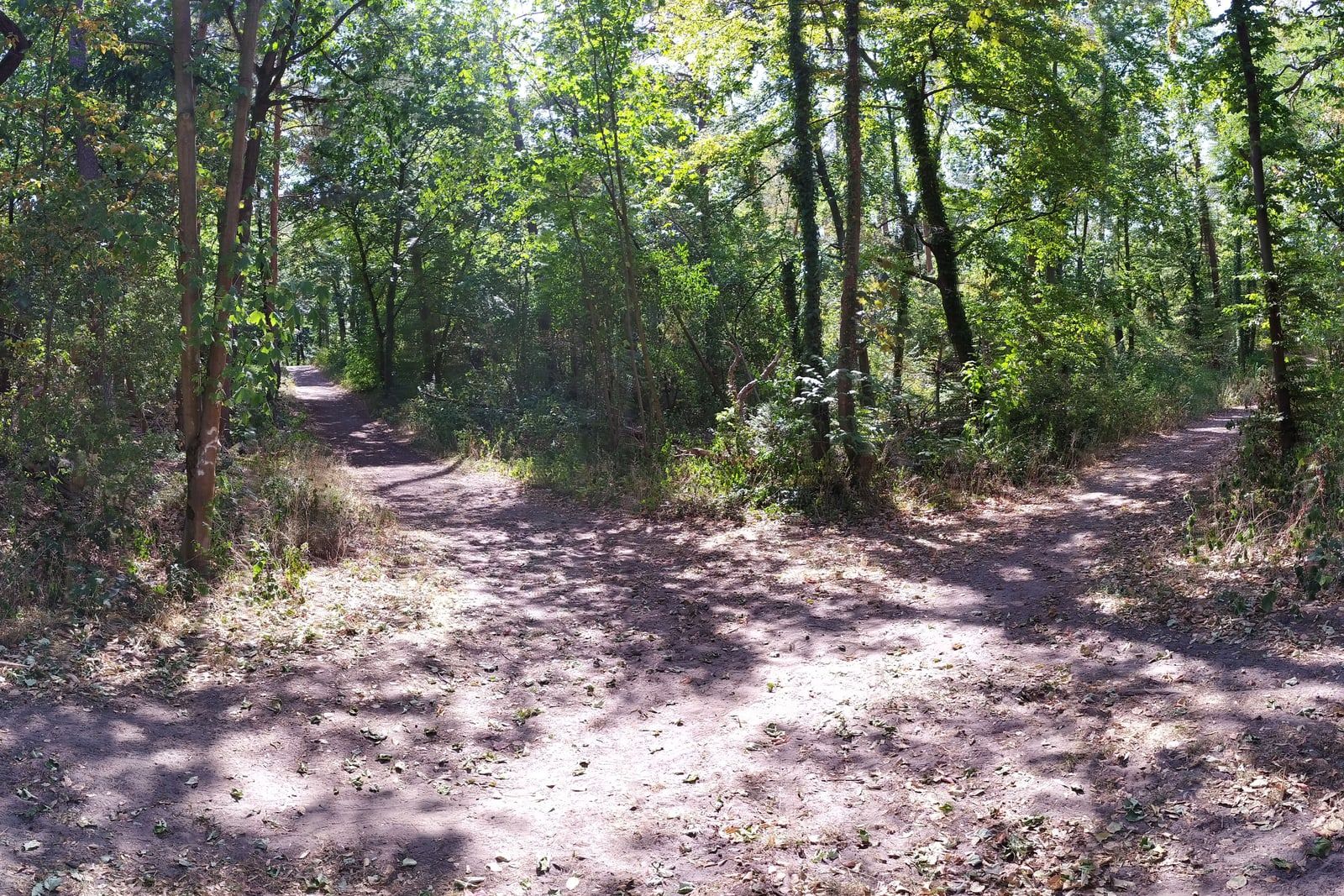
The method has two moves, and the second is the interesting one. The agent forks into K parallel branches, and each branch inherits the accumulated workspace — the files and artifacts produced so far. Then each branch flushes its chat context and starts a fresh conversation on top of that work. After a fixed horizon, the highest-scoring branch is kept and the rest are discarded.
The point is the separation. The work survives; the reasoning that led to it does not. An agent that has argued itself into a particular framing carries that framing forward in its context window, and clearing the window while keeping the files lets a branch look at the same artifacts without the commitments.
The numbers
Across 13 long-horizon research and engineering tasks — polyomino packing, job-shop scheduling, cryptanalysis, compressing a CIFAR classifier, optimising a VLIW kernel — and at equal compute, the paper reports fork-and-flush beating a single run by 66.0% and best-of-N by 44.4% on min-max normalised average score.
As The Decoder lays out the figures, that is a normalised average of 0.78 against 0.47 for a single run and 0.54 for best-of-four. The standard deviation also falls, from 0.26 to 0.16, which matters more than the mean for anyone deciding whether to trust one run. Fork-and-flush had the highest mean on 12 of the 13 tasks. Flushing alone, without branching, produced a smaller improvement on its own.
The runs took anywhere from several hours to more than 100, using GPT-5.6-terra and GPT-5.5 driven through the GitHub Copilot CLI. These are the paper’s own measurements, not an independent replication.
Whether it survives better models
The authors anticipate the obvious objection — that this is a crutch for weak models. They ran a separate study with Qwen3.5 at 4B, 9B and 27B on MAX-3-SAT problems and found run-to-run variance following an inverted U across model sizes, peaking on tasks sitting at the edge of each model’s ability.
Their argument is that open research problems are by definition at that edge, so the variation fork-and-flush exploits should persist as models improve, with the boundary simply moving to harder problems. That is a prediction rather than a result, and it is the part worth testing.